 |
Tuesday, 4 June 2013
The man Thomas Cromwell in the novel Wolf Hall by Hilary Mantel
Wolf Hall seems to me a many-headed book, imagining a changing
England, as it comes about though the influence of the King's favourite, master
manipulator Thomas Cromwall. The court is probably in need of a revolution when
he takes centre stage at the right hand of the king. It's a world where earls
slimily ingratiate themsleves through spying and favours to get close to power.
The intricate web of influence Cromwell weaves is built from his principles of
balancing the books, a curiosity and a humanity that runs against many
historical retellings of the character. My attempt to put these on paper is
shown below.
The main draw of the novel for me is the strong characterisation of Cromwell,
whether true or not. When someone needs to turn the tide of a political spat
between Anne Boleyn and Henry VIII we know it is "he"; when Cromwell
takes in young sons of other officials we know they are on the way to great
things; when he dreams of the spectre of his wife Liz or pushes over former
foes we identify with his losses and victories; often, we admire him, and
often, we don't like him. He's as likely to ride roughshod over individual's
conscience, and bend a man's will to fit his purpose to prop up the new queen
and his new vision of England, as he is to show a generous hand with the power
he accrues, assisting a French academic, helping abandoned widows, secretly
supporting reformers as they spread copies of Tyndale's Bible (this last aspect
being an invention of the author, I think). Either way he helps to forge a new
England and the book is optimistic about that. It occurs to me that maybe,
instead of being cynical about our country, we could ponder the kind of society
we want to form - the kind that is diverse and progressive and comes to the aid
of the underprivileged, and does not overlook injustice. Let's just not be too
ruthless in pursuing our dreams...


Tuesday, 21 August 2012
Sketches for Summer
Some new sketches I managed to get done in between the other things this summer. I'm sharing these as I want to encourage and inspire any budding artists out there!


There are some tentative plans afoot to put some art up in the Oasis for people to enjoy - so please let me know if you are interested in doing this.
The Oasis is a pub that Carey Baptist Church has renovated recently and is running community events at so that we can meet more people in a friendly way - the website is www.theoasisreading.org.uk.
 Let's keep on seeking to use the skills we've been given.

Thanks to Tom Clarke who took the photo which I worked from!
I was really pleased to get this finished in time for a wedding...

And here's one I started before I broke my arm, and then abandoned, but I kind of like it as it is:

There are some tentative plans afoot to put some art up in the Oasis for people to enjoy - so please let me know if you are interested in doing this.
The Oasis is a pub that Carey Baptist Church has renovated recently and is running community events at so that we can meet more people in a friendly way - the website is www.theoasisreading.org.uk.

Movie of the summer?
So today heralds my return to blogging after the Olympics and everything. Hoping to relaunch it and give it a new look too, when I can, if summer slows down enough.
For now I'll just point you to something I wrote on The Dark Kinght Rises and I'm up for hearing your comments on the movie too, and the themes in it.
If you go to the link below you'll find my thoughts in detail on the movie:
http://www.careybaptistchurch.org.uk/2012/01/30/%E2%80%9Cthe-dark-knight-rises%E2%80%9D-questions-for-us-from-the-movie/
 But in brief, I liked:
+How the vision of the movie is to tell a story in a mostly realistic like the previous two movies and is not just dressed-up superheroes posing a lot
+The great cast and some surprising and satisfying character arcs, such as that of John Blake, the policeman.
+The way the menace of Bane picks up on some of the recent mood in our cities: "Everything's corrupt anyway, so why can't I get what I want".
+The sense of craziness when Bane gets his way, and the way they adapted the comic characters into a firghtening reality.
+The sense of redemption and hope that as the story ends there is something better for some of the characters to come, like in "Inception".
Any quibbles with the script are very minor, in my opinion. Let me know if you agree in the comments below!
For now I'll just point you to something I wrote on The Dark Kinght Rises and I'm up for hearing your comments on the movie too, and the themes in it.
If you go to the link below you'll find my thoughts in detail on the movie:
http://www.careybaptistchurch.org.uk/2012/01/30/%E2%80%9Cthe-dark-knight-rises%E2%80%9D-questions-for-us-from-the-movie/

+How the vision of the movie is to tell a story in a mostly realistic like the previous two movies and is not just dressed-up superheroes posing a lot
+The great cast and some surprising and satisfying character arcs, such as that of John Blake, the policeman.
+The way the menace of Bane picks up on some of the recent mood in our cities: "Everything's corrupt anyway, so why can't I get what I want".
+The sense of craziness when Bane gets his way, and the way they adapted the comic characters into a firghtening reality.
+The sense of redemption and hope that as the story ends there is something better for some of the characters to come, like in "Inception".
Any quibbles with the script are very minor, in my opinion. Let me know if you agree in the comments below!
Wednesday, 19 October 2011
Mini book reviews: Snowdrops and Seeing Stars
 Snowdrops (Atlantic Books), a novel by A D Miller, is an intriguing tale about the modern Moscow, with all the wonder of young love and high-class establishments and the snow and the sense of making it through - plus the corruption and the excess and the smut and property crime. I quite liked it as a tale of a naive man becoming corrupted, and in an odd way seeing that he does not care what a fool he's been, which is at least honest. Basically he meets and spends time in Moscow with a beautiful woman
called Masha and a businessman in a cowboy hat, and he just goes with
it. Not the best crime/love story I've read, but the descriptions of the snow are pretty fantastic, and give the whole thing a sense of mysterious symbolism. What can be lost or buried in the snow - is it, somehow, your own self?
Snowdrops (Atlantic Books), a novel by A D Miller, is an intriguing tale about the modern Moscow, with all the wonder of young love and high-class establishments and the snow and the sense of making it through - plus the corruption and the excess and the smut and property crime. I quite liked it as a tale of a naive man becoming corrupted, and in an odd way seeing that he does not care what a fool he's been, which is at least honest. Basically he meets and spends time in Moscow with a beautiful woman
called Masha and a businessman in a cowboy hat, and he just goes with
it. Not the best crime/love story I've read, but the descriptions of the snow are pretty fantastic, and give the whole thing a sense of mysterious symbolism. What can be lost or buried in the snow - is it, somehow, your own self?
On watching House and living life

House has a way of exploding situations until their practically unbearable for his colleagues in order to expose to themselves what the new selfish or dumb thing they are really doing is. He won't let anything go.* It's pretty fascinating.
 |
| House says things like this - isn't he a charmer? |

Living real life
As a Christian I've recently been challenged in a number of ways that the life we have been given is the important thing, and it is exciting! It goes on beyond 45-minute-manageable-sessions, and its problems are bigger and more protracted. The life we have matters, the people in it matter and their vastly different situations matter. This life is significant.
Sometimes we can find things mundane, and I know I can even feel like everything is worthless after a really bad day. But this is a lie. God has given us all things to enjoy and responsibility to use our abilities to do good and make an impact on other people's lives and the world. How is this not significant? Even producing things for others to enjoy is significant, as we develop his world and we can invest in that some of the value that we ought to place on good things in his good creation.
Going back to watching TV for a minute - I'm not knocking it, as it is good to enjoy as a gift from God. But as Christians should we not be more hooked on God as the beautiful and glorious and pure and wise one from whom all these good things come? (Phillippians 3:7-11.) Shouldn't he fundamentally change the way we enjoy and engage with everything (see eg Philippians 4:11-13.) Let's wholeheartedly enjoy living and receiving from him with a knowledge of him as the giver and him as the source. When God brings his restoration to humanity and makes the world new, all will see that he is the most significant anything in the universe, he is far above anything and anyone.* All else really is second-rate!
And let's see other people in our town and their lives as significant, as they are not only a creation of God, not only do they bless us and enrich our lives in many ways when you think about it, but also they are made in God's image: They really are here because he dreamed them up and wanted them here, and he made them to shine out a little of God's character or nature, no matter how corrupted that might have become. When we are engaging with real people in the real world, we engage with complex and wonderful beings, and we can make a difference. And that's exciting.
--------
**See for instance Revelation 7:9-12 where huge worship is going on all in honour of the "Lamb". This is Jesus who is described in the New Testament to be the ultimate sacrifice, the lamb of God, fulfilling the passover lamb role from the Old Testament. The point I'm making is he's shown to be worthy of all the honour the universe can give. May many begin to honour him first gladly now and be able to enter into that worship of him in heaven.
Wednesday, 28 September 2011
Batman: The Long Halloween - the best and most unsettling whodunit in comics?
What makes a good whodunit? At the least, strong characters, clues and a clever twist. But also: interesting psychology, defective personalities or madness and multiple points of view, an ominous danger at large, and something that challenges justice itself, provoking us to speculate on wider societal issues or ills or the very human heart itself.
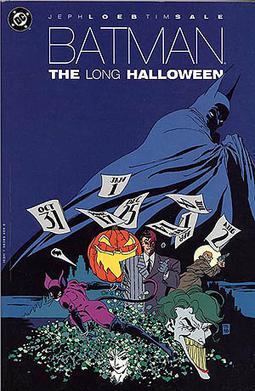
On my recent holiday I finally got to read Batman: The Long Halloween, which provides all of these. Best of all, it has a final chapter that keeps its secrets until the very last pages, as well as managing to subvert not only Bruce Wayne's mindset and mission as the Batman, but also perhaps the way we imagine our lives to be: secure and incorruptible and wholesome, while we set up structures and people as idols we will follow at all costs.
 This graphic novel, originally published as a 13-issue comic series in 1996-7, stands by itself, while using some of the characters from Frank Miller's amazing character-piece Batman: Year One, notably the mafia family of the Falcones (with shades of The Godfather). The story is set across a year with each chapter themed after a different holiday, like Valentines Day and Fathers Day and so on. At this point Bruce Wayne is growing into the Batman role and working more closely with the "dream team" Jim Gordon and Harvey Dent, who is the "Apollo" District Attorney and very much the last public light against corruption for Gotham (you remember him from The Dark Knight?). Imagine the public and private pressure setting in as Harvey must find a way to bring down the criminal families, while the Batman tries to solve an increasingly unstoppable series of murders while being led in all the wrong directions but some of his usual enemies: The Scarecrow, the Joker, Poison Ivy.
All of which ends up, I think, brilliantly, making the Batman into a valiant failure. How could he have let the murders keep happening, and why didn't he do more, sooner? Perhaps we should see it the other way: how could one man, limited by his own point of view and frustrated and distracted by his enemies, ever hope to redeem a city anyway? What does he have to lean on after all? The help of a few friends in Gotham? The hope of a better future? His brain, or being able to infiltrate and be there to stop crime at the right time? I think the way the ending comes about and the last words "I believe in Harvey Dent" mirror his own words "I believe in Gotham city" at the start show a world in crisis and a world where individuals act out of their own belief systems, at odds with each other. What a place of despair Gotham would really be - it's a bit like the repeated refrain of the book of Judges "everyone did as they saw fit" and great wickedness reigns because of it (17:6, 19:1, 21:25).
There's more going on here beneath the chaotic criminal goings-on and the beautifully dream-like noir-style of art (by Tim Sale, who drew art for and designed the look of TV series Heroes). This art adds to the whole by detailing the characters' expressions so we can believe in the characters feeling what they are doing - from the desperation of the crime-lords to the toughness of Jim Gordon. They only want to see things through...
For another good Batman story which acts as a whodunit, try Face the Face which is set much later, after Batman has been away from Gotham for a year. He comes back with perhaps a bit more humanity (which was cool to see) as he re-teams with Robin and tries again to work with Harvey Dent to uncover a murderer, but can he trust Harvey?
On my recent holiday I finally got to read Batman: The Long Halloween, which provides all of these. Best of all, it has a final chapter that keeps its secrets until the very last pages, as well as managing to subvert not only Bruce Wayne's mindset and mission as the Batman, but also perhaps the way we imagine our lives to be: secure and incorruptible and wholesome, while we set up structures and people as idols we will follow at all costs.
All of which ends up, I think, brilliantly, making the Batman into a valiant failure. How could he have let the murders keep happening, and why didn't he do more, sooner? Perhaps we should see it the other way: how could one man, limited by his own point of view and frustrated and distracted by his enemies, ever hope to redeem a city anyway? What does he have to lean on after all? The help of a few friends in Gotham? The hope of a better future? His brain, or being able to infiltrate and be there to stop crime at the right time? I think the way the ending comes about and the last words "I believe in Harvey Dent" mirror his own words "I believe in Gotham city" at the start show a world in crisis and a world where individuals act out of their own belief systems, at odds with each other. What a place of despair Gotham would really be - it's a bit like the repeated refrain of the book of Judges "everyone did as they saw fit" and great wickedness reigns because of it (17:6, 19:1, 21:25).
There's more going on here beneath the chaotic criminal goings-on and the beautifully dream-like noir-style of art (by Tim Sale, who drew art for and designed the look of TV series Heroes). This art adds to the whole by detailing the characters' expressions so we can believe in the characters feeling what they are doing - from the desperation of the crime-lords to the toughness of Jim Gordon. They only want to see things through...
For another good Batman story which acts as a whodunit, try Face the Face which is set much later, after Batman has been away from Gotham for a year. He comes back with perhaps a bit more humanity (which was cool to see) as he re-teams with Robin and tries again to work with Harvey Dent to uncover a murderer, but can he trust Harvey?
Sunday, 25 September 2011
Metronomy - the beat of the wierd
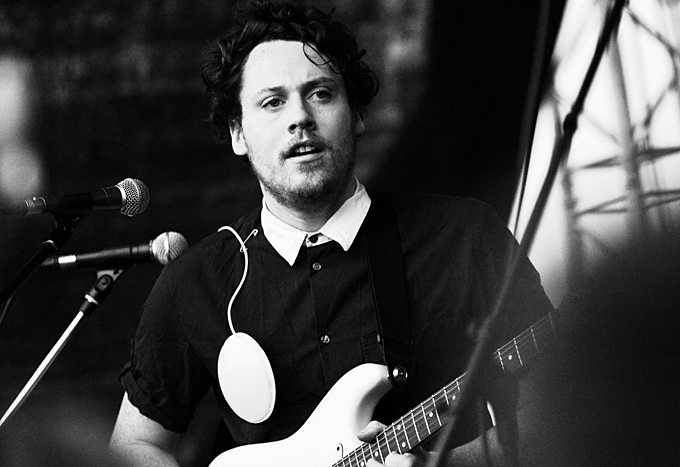
If I've given you a lift in my car lately, chances are you might have heard some of the new Metronomy album I've been playing a lot: The English Riveria.

Typically known for their remixes of other work (eg Goldfrapp's Happiness) this seems to be a kind of breakthrough album for the odd outfit, who use mostly electronic instruments and percussion but also use voice and other stuff (nice bit of flute near the end of the album).
I like the quirkiness and catchiness of the beat, and the slightly chaotic way of mixing all this with the lyrics and riffs and short keyboard melodies. It's superior synth nonsense that achieves something more - try tracks like the well-balanced "The Bay" the addictive "The Look" and the pop-like "Everything Goes My Way". Then delve into the rest of the album and be surprised by the cool restraint of "Loving Arm" or the expanding upbeat guitar/synth sound of "Corinne" that slowly fills out the room with the chorus (of sorts): "I got my heart tied up, I got my heart in a bind, she just wants to dance all the time".
Recommended as something a bit different to everyday pop.
Picture by Платонова Алина (http://gete-ap.livejournal.com/62796.html) [CC-BY-SA-3.0 (www.creativecommons.org/licenses/by-sa/3.0) or GFDL (www.gnu.org/copyleft/fdl.html)], via Wikimedia Commons
Picture by Платонова Алина (http://gete-ap.livejournal.com/62796.html) [CC-BY-SA-3.0 (www.creativecommons.org/licenses/by-sa/3.0) or GFDL (www.gnu.org/copyleft/fdl.html)], via Wikimedia Commons
The Sunflower

A poem I wrote a few months ago:
The Sunflower
We hold up and gaze at
The head as big as our own,
It scours the earth below,
Magnificent;
We cradle it in child’s arms.
Let’s prise out seeds
Over the earth to watch
And listen to their flat sides bed down
In secret;
A molten dew-shower.
Here lies our treasure,
X marks the spot,
Let the place not be forgot.
Dreamily it asks why
We cut off its head –
“we were young”
We stammer,
“You seemed dead”;
We saw the plunder,
The wealth we hoped for;
We went for broke.
© Richard Townrow

Saturday, 27 August 2011
Sparrows, living and reading Small Gods

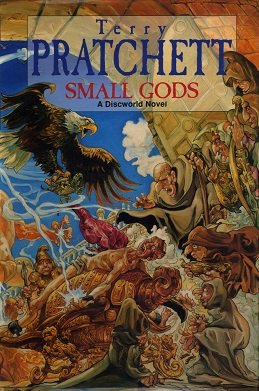
In Pratchett's fantasy world gods exist if they have believers, otherwise they fade to barely a whisper, their minds fractured, barely keeping themselves together. Some start there but manage to work their way up to real power through accumulating believers. This means that they have to work out how to manipulate people into following them, which doesn't bode well for the cause of truth, love and justice. Indeed through the course of Small Gods it's a human who teaches the small god Om ethics, a way of leading a people to treat others more fairly and with respect.
 Interestingly as with a lot of Pratchett books, the stupidity of humanity is brought out here, because despite the ethical way being the one way free of bloodshed, the people still want war, because of honour, duty, hurt pride, impatient zeal for change, and revenge. Pratchett shows how lucky we have to be for good leadership to win out, when people's hearts are bent like this, and when people are preoccupied by things that don't really matter. The small god points out that people will believe anything, even in the power of an army or god, or in the revolutionary spirit or human philosophy, if it suits them - if they think it will allow them to gain something in the world, if it promises them something they feel they need. Both the religious who hold on to a system and the militant atheists have ambitions and values at fault in this in the book - rushing into their cause without thinking of the consequences in terms of their responsibilities to seek peace for their fellow man. Knowledge is co-opted into making machinery of war. Only one or two characters have the eyes to see the folly of the people.
The hypocrisy of the harsh religious system in Omnia is plain and some are brimming to just escape from the rules, while others find meaning in enforcing them. But when it comes down to it, what do the religious sacrifices they make or the battles fought in the name of honour or revenge gain them?* If this is a kind of bargaining with the gods, it’s a poor deal. I think we need this sort of clarity in thinking about why we do the things we do. Our culture is tied up in pursuits, whether of influence, reputation on- or offline, expertise, deeper relational links, a hoard of commercial products we feel we need, the avoidance of any pain or suffering, the best holidays, and constructed meaning in other ways. What does all of this gain us in the long run? Is the key not to obsess and just find balance? And what does it gain us in the face of death and beyond that eternity? When we realise we are going somewhere next and that we can't take anything with us, why do we get so caught up in so many pursuits which seemingly can continue all our lives?
If our ultimate destination is to be a kind of wimpy non-physical confused and hopeless half-life, I'd hate it too. Maybe this is what people fear most today: being insignificant, being unfulfilled in this life and withering away. They want to live fully and die young and happy. I can relate to this. But as a Christian I want to challenge the assumptions here - I want to say that living into old age, disability, or insignificance in the eyes of the world and living even in weakness and illness can be real living if it's done in relationship with God. If real love is experienced. If you are getting to know him and trust him better, if you are awaiting his promise to bring a kingdom where you can fully be with him, if you see his goodness no matter your situation, weakness can be a time of blessing. Furthermore if we have a hope beyond this life in the one man who came back from death, Jesus-Christ, the God-man, we do not have to have a fear of death and can get on with living for what really matters.
 All in all, a thought-provoking entry into the Discworld series that I could relate to a lot. People are cowardly and create systems that don't work, and forget the value of true liberties in society. Luckily our God is large and will never lose the plot. He cares about us more than many sparrows. Like Om he listens to us, but unlike Om he loves us and knows what is good, and will never get trapped in the body of a tortoise.
--------
*You wonder if there was this kind of hotchpotch of mixed motives in the recent march on Tripoli. There must be stories to be found there both of altruism and, sadly, brutish steamrolling over the ones in the way.
Cover image uploaded from Wikipedia to illustrate the book I'm discussing. It's originally derived from a digital capture (photo/scan) of the book cover (creator of this digital version is irrelevant as the copyright in all equivalent images is still held by the same party). Copyright held by the publisher or the artist. Claimed as fair use regardless.
Monday, 22 August 2011
Summer 2011 sketches and photos
There's been so much to enjoy this summer! Highlights have been: a holiday in Deal, seeing some action movies with friends, eating out (tapas) with some international students and attempting to teach them English phrases, catching up with my older brother and school-friends, and going to some great weddings, which have felt like big happy celebrations.
With all this going on, it's no wonder this blog has been looking a little neglected. Please check out this small collection of photos and sketches I've produced and stay tuned for proper updates.





With all this going on, it's no wonder this blog has been looking a little neglected. Please check out this small collection of photos and sketches I've produced and stay tuned for proper updates.


Subscribe to:
Posts (Atom)