So today heralds my return to blogging after the Olympics and everything. Hoping to relaunch it and give it a new look too, when I can, if summer slows down enough.
For now I'll just point you to something I wrote on The Dark Kinght Rises and I'm up for hearing your comments on the movie too, and the themes in it.
If you go to the link below you'll find my thoughts in detail on the movie:
http://www.careybaptistchurch.org.uk/2012/01/30/%E2%80%9Cthe-dark-knight-rises%E2%80%9D-questions-for-us-from-the-movie/
But in brief, I liked:
+How the vision of the movie is to tell a story in a mostly realistic like the previous two movies and is not just dressed-up superheroes posing a lot
+The great cast and some surprising and satisfying character arcs, such as that of John Blake, the policeman.
+The way the menace of Bane picks up on some of the recent mood in our cities: "Everything's corrupt anyway, so why can't I get what I want".
+The sense of craziness when Bane gets his way, and the way they adapted the comic characters into a firghtening reality.
+The sense of redemption and hope that as the story ends there is something better for some of the characters to come, like in "Inception".
Any quibbles with the script are very minor, in my opinion. Let me know if you agree in the comments below!
Showing posts with label film thoughts. Show all posts
Tuesday, 21 August 2012
Saturday, 7 May 2011
The Dark Knight Rises - will it include a Lazarus pit?
If you haven't heard already, The Dark Knight Rises (the next Batman flick) is filming and all over the internet you can see a leaked photo of some green liquid on one of the sets. This isn't pointless slime - it's bright green so it can be picked up from footage easily and altered or animated somehow. So what?
It suggests a Lazarus pit* could be involved. If you don't know the comics the Lazarus pits of Ra's Al Ghul are able to sustain/strengthen life or even bring someone back from death. It also seems to bring on a form of madness, although this isn't totally consistent in the comics.
The fun of having this supernatural thing happening in Batman's adventures was knowing this just does not fit with his view of the world. He works all the angles and needs to know how all the mechanisms work. But what of souls? And if they come back into lifeless bodies, where did they go in the meantime - what science could he use to deduce this? He can investigate but not get to the bottom of it: in the end it is more that he has to accept it.**
Where could director Christopher Nolan and his increasingly impressive cast take this? Here are a few possibilities:
1) Surely this means that Ra's Al Ghul is returning - or possibly a successor like his daughter Talia, who was unseen in Batman Begins. The ninjas Bruce faced in his mansion were from a long line, and that line is bound to have continued somewhere. And Ra's could be resurrected through use of the pit, or perhaps Batman will stop him just in time?
2) It's not very likely, but Bruce and Gordon could try and resurrect Harvey Dent (aka Two-Face) in one of the pits to try to re-create the white knight who fell in The Dark Knight.
3) The new film is called The Dark Knight Rises - so could Batmen die and someone resurrect him in one of the pits? This would fit with the previous film's theme of the city of Gotham needing someone like the Dark Knight, and be a nice counterpoint to the start of the film which I imagine will be about the police and/or army hunting Batman for the murders everyone thinks he committed in The Dark Knight. Could be quite cool, and a related idea was used in the recent comic Batman and Robin issue 7 and 8: Blackest Knight, with the question being - is the Batman who emerges from the pit going to be the right one, and in his right mind? (Batman and Robin stars a new Batman, as Bruce Wayne apparently died in the comics recently***)
4) It could be a new evil using the pit endlessly to stay alive. The evil has surely got to be something that affects the whole city, like the Joker did, and a villain who seems to have power over death could inspire horror and even submission in the populace.
On a related note, the villian Bane is set to be in new movie I hear - and I hope this is done well. In the comics he is often used very poorly and has little or no character. He is just famous for a dark epic story from the early nineties where he broke Batman's back and totally defeated him.... wonder if this could be where the film goes?
Either way I'm sure the writers will love to play with the idea of questioning whether it's possible to rise from death and live in a kind of mad power-mad immortality that many villains in comics seem to want to achieve. What messages might come through about what real living is, I wonder? Or about relinquishing power and serving a city of other people? Furthermore there was always something Satanic about the pits, which are in the belly of the earth and perpetuate the life of a centuries-old manipulater and murderer whose legacy is a cult of warriors who obey his every word. Perhaps the film will bring out the horror of this monstrous and unnatural battle for supremacy over the world from below.
With Marvel taking another step in the right direction with Thor and then Thor, Iron Man and Hulk joining the Avengers film next year****, Batman faces stiff competition in the superhero movie department. But I have confidence The Dark Knight Rises will prove to be more thought-provoking and mature than the others (much as I like them)!
*Presumably named after the biblical Lazarus, an ordinary man Jesus publically raised from death.
**Over the years Batman has been forced to accept there are some supernatural things in the universe, although even in Neil Gaiman's excellent recent story "Whatever happened to the caped crusader?" Batman states that he does not believe in a god, and the story still emphasises his own role in carving his own meaning in his physical existence - while portraying him as a kind of unstoppable force against evil in an eternal battle against evil (Yes, wierd huh?)
***I'm quite behind with Batman, as I have a pile of UK-produced Batman Legends comics to read, and the UK comics are way behind the US ones. The death of Batman is shown within Final Crisis, which you should read alongside the main Batman storyline right through from Batman and Son to the Black Casebook and Batman RIP.
****Directed by Joss Whedon, creator of Buffy, Firefly and Serenity and writer of the first four volumes of Astonishing X-men!
It suggests a Lazarus pit* could be involved. If you don't know the comics the Lazarus pits of Ra's Al Ghul are able to sustain/strengthen life or even bring someone back from death. It also seems to bring on a form of madness, although this isn't totally consistent in the comics.
The fun of having this supernatural thing happening in Batman's adventures was knowing this just does not fit with his view of the world. He works all the angles and needs to know how all the mechanisms work. But what of souls? And if they come back into lifeless bodies, where did they go in the meantime - what science could he use to deduce this? He can investigate but not get to the bottom of it: in the end it is more that he has to accept it.**
Where could director Christopher Nolan and his increasingly impressive cast take this? Here are a few possibilities:
1) Surely this means that Ra's Al Ghul is returning - or possibly a successor like his daughter Talia, who was unseen in Batman Begins. The ninjas Bruce faced in his mansion were from a long line, and that line is bound to have continued somewhere. And Ra's could be resurrected through use of the pit, or perhaps Batman will stop him just in time?
2) It's not very likely, but Bruce and Gordon could try and resurrect Harvey Dent (aka Two-Face) in one of the pits to try to re-create the white knight who fell in The Dark Knight.
3) The new film is called The Dark Knight Rises - so could Batmen die and someone resurrect him in one of the pits? This would fit with the previous film's theme of the city of Gotham needing someone like the Dark Knight, and be a nice counterpoint to the start of the film which I imagine will be about the police and/or army hunting Batman for the murders everyone thinks he committed in The Dark Knight. Could be quite cool, and a related idea was used in the recent comic Batman and Robin issue 7 and 8: Blackest Knight, with the question being - is the Batman who emerges from the pit going to be the right one, and in his right mind? (Batman and Robin stars a new Batman, as Bruce Wayne apparently died in the comics recently***)
4) It could be a new evil using the pit endlessly to stay alive. The evil has surely got to be something that affects the whole city, like the Joker did, and a villain who seems to have power over death could inspire horror and even submission in the populace.
On a related note, the villian Bane is set to be in new movie I hear - and I hope this is done well. In the comics he is often used very poorly and has little or no character. He is just famous for a dark epic story from the early nineties where he broke Batman's back and totally defeated him.... wonder if this could be where the film goes?
Either way I'm sure the writers will love to play with the idea of questioning whether it's possible to rise from death and live in a kind of mad power-mad immortality that many villains in comics seem to want to achieve. What messages might come through about what real living is, I wonder? Or about relinquishing power and serving a city of other people? Furthermore there was always something Satanic about the pits, which are in the belly of the earth and perpetuate the life of a centuries-old manipulater and murderer whose legacy is a cult of warriors who obey his every word. Perhaps the film will bring out the horror of this monstrous and unnatural battle for supremacy over the world from below.
With Marvel taking another step in the right direction with Thor and then Thor, Iron Man and Hulk joining the Avengers film next year****, Batman faces stiff competition in the superhero movie department. But I have confidence The Dark Knight Rises will prove to be more thought-provoking and mature than the others (much as I like them)!
*Presumably named after the biblical Lazarus, an ordinary man Jesus publically raised from death.
**Over the years Batman has been forced to accept there are some supernatural things in the universe, although even in Neil Gaiman's excellent recent story "Whatever happened to the caped crusader?" Batman states that he does not believe in a god, and the story still emphasises his own role in carving his own meaning in his physical existence - while portraying him as a kind of unstoppable force against evil in an eternal battle against evil (Yes, wierd huh?)
***I'm quite behind with Batman, as I have a pile of UK-produced Batman Legends comics to read, and the UK comics are way behind the US ones. The death of Batman is shown within Final Crisis, which you should read alongside the main Batman storyline right through from Batman and Son to the Black Casebook and Batman RIP.
****Directed by Joss Whedon, creator of Buffy, Firefly and Serenity and writer of the first four volumes of Astonishing X-men!
Friday, 7 January 2011
Anime: Review of interesting action/drama "Tekkonkinkreet"
This Japanese animated film isn’t going to be for everyone, but you will probably like it if you liked the weirdness and the action of The Matrix or Akira and the colour of Slumdog Millionaire. Starring two brothers, Black and White, known as the Cats, who roam the streets and stamp their authority over the area, much of the drama comes from the fact that they are both children, making their way on their own, carrying out death-defying street-running stunts; but, because of how young they are, the violence they get into is quite disturbing, the measures they take to protect one another necessarily lethal.
Why are they being attacked by Terminator-like, unstoppable blue figures, silent figures who appear with little explanation, as if from some advanced alien future? They have been set on the Cats by Snake who wants to modernise Treasure Town and bring in more money for the Yakuza. The gangsters are trying to change, despite growing pains, and the brutal tactics they take mirror Black’s journey, who, as the older and more canny brother, becomes wilder in defending their street lifestyle.
There are mysteries a-plenty in the town, especially the bond between Black and the childishly playful White, with her strange, probably psychic, insights. And the theme of loss of innocence as the city changes pervades the story, including a brief scene depicting the two cops (whose empty threats are ignored by the gangsters) visiting a strip club for the first time to meet an older Yakuza. Perhaps the blue men are figures of an unstoppable amoral future, or show how the city is being taken over by a modern alien world outside.
With a shocking climax that takes us further away from the reality of the colourful city, it’s clear that in this town the price of safety is corruption, but what kind of safety does it buy? And can corruption be undone? These are questions left ambivalent despite a satisfying end to the brothers’ story. Maybe too disturbing or weird for some, I found this action-packed and interesting story highly entertaining.
Why are they being attacked by Terminator-like, unstoppable blue figures, silent figures who appear with little explanation, as if from some advanced alien future? They have been set on the Cats by Snake who wants to modernise Treasure Town and bring in more money for the Yakuza. The gangsters are trying to change, despite growing pains, and the brutal tactics they take mirror Black’s journey, who, as the older and more canny brother, becomes wilder in defending their street lifestyle.
There are mysteries a-plenty in the town, especially the bond between Black and the childishly playful White, with her strange, probably psychic, insights. And the theme of loss of innocence as the city changes pervades the story, including a brief scene depicting the two cops (whose empty threats are ignored by the gangsters) visiting a strip club for the first time to meet an older Yakuza. Perhaps the blue men are figures of an unstoppable amoral future, or show how the city is being taken over by a modern alien world outside.
With a shocking climax that takes us further away from the reality of the colourful city, it’s clear that in this town the price of safety is corruption, but what kind of safety does it buy? And can corruption be undone? These are questions left ambivalent despite a satisfying end to the brothers’ story. Maybe too disturbing or weird for some, I found this action-packed and interesting story highly entertaining.
Thursday, 30 September 2010
Movies: No 3-D, but good stories
Here's a few films I've enjoyed recently. Also be sure to check out my review of Moon, one of the more thought-provoking films to come out last year.
Scott Pilgrim vs the World: Awesomely silly. Brilliantly smile-inducing odd-ball characters in a crazy old-school-copmputer-game style situation, where Scott must overcome the sinister exes of his love Ramona Flowers in order to date her. Also, I couldn't help slightly relating to Scott's geeky awkwardness or his off-on-another-planet moments. Set to become a cult classic?
The Soloist: Good but not excellent film which dares to explore the real challenges of homelessness and mental health problems. Jamie Fox's character shows us how there are sometimes multiple factors warring against some needy people. Even Robert Downey Jr is brought down a peg or two through his unlikely commitment to a man on the street.
Girl, Interrupted: In what could have been a very depressing story about jailbirds in a psychiatric institution, assured direction and a good story make this a film about struggling to live as decent and "whole" person in society. Winona Ryder's performance is brilliant (more so than Angelina Jolie), but so is the rest of the cast. It's a sometimes disturbing, sometimes hopeful film which raises questions about how we judge what is acceptable behaviour and how we best gives ourselves a chance in life. Not sure it always answers all those questions, but then that's life - which sometimes can be muddled.
Toy Story 3: The series has grown up, in my view, as a more dread-laden universe threatens the classic characters. Still manages to get us anxious as the toys head on several new journeys. Also: very funny.
Inception: Not sure what else can be said about this. Wait, yes I do. I'd love to hear someone's thoughts on the pyschology of the team trying to turn someone against an idea through using their feelings about their parents. Is this actually quite bad (or simplistic) psychology, assuming that the way we think is that much a product of our relationships with our parents? I'm not denying that we are influenced by our family, consciously or sub-consciously, but it seemed a little neat in the film, now that I think about it...
Scott Pilgrim vs the World: Awesomely silly. Brilliantly smile-inducing odd-ball characters in a crazy old-school-copmputer-game style situation, where Scott must overcome the sinister exes of his love Ramona Flowers in order to date her. Also, I couldn't help slightly relating to Scott's geeky awkwardness or his off-on-another-planet moments. Set to become a cult classic?
The Soloist: Good but not excellent film which dares to explore the real challenges of homelessness and mental health problems. Jamie Fox's character shows us how there are sometimes multiple factors warring against some needy people. Even Robert Downey Jr is brought down a peg or two through his unlikely commitment to a man on the street.
Toy Story 3: The series has grown up, in my view, as a more dread-laden universe threatens the classic characters. Still manages to get us anxious as the toys head on several new journeys. Also: very funny.
Inception: Not sure what else can be said about this. Wait, yes I do. I'd love to hear someone's thoughts on the pyschology of the team trying to turn someone against an idea through using their feelings about their parents. Is this actually quite bad (or simplistic) psychology, assuming that the way we think is that much a product of our relationships with our parents? I'm not denying that we are influenced by our family, consciously or sub-consciously, but it seemed a little neat in the film, now that I think about it...
Monday, 28 June 2010
American History X
Brutal and horrible, but totally compelling, I wanted to mention this film for a couple of reasons:
1. It's unusual to find a film that deals so convincingly with the human psyche. It shows how one man in American suburbia realises that the militant white power cause he's been living for is foolish and destructive. He sees that the movement has begun to manipulate him, making him a figure to revere because of the two murders he carried out - while he serves a tough prison sentence, alone and friendless.
At the beginning of the story Derek (played brilliantly by Edward Norton) is a neo-Nazi, full of hate, totally unpleasant, power-hungry, manipulative, clever but arrogant, full of testosterone and turning everything into protecting his family from who he sees as the enemy: foreigners and outsiders. But in light of the way he's humiliated in prison (a horrible section) he gets out of that life, which he tells his younger brother Danny is no good for him. He becomes a man determined to change, and to stop Danny following the same rebellious, anti-social path.
Some of the issues this raises are very interesting. For instance - why is it we tend to desire what is best for close family, even if we have given up on ourselves? This rings true.
And it highlights how, without something life-changing snapping us out of it, we tend to believe what is most convenient, what fits with the ideas that have influenced us in the past. This is how prejudices work I think eg. against immigrants. We can become trapped by ideas, which are actually lies, thinking we know all the facts. We weild the "facts" as weapons, or to stir us on.
And such "facts" can be power - a way to put down others and assert oneself or "succeed" in life. Feelings of injustice and resentment find a target. Responsibility is avoided, and so are responsible solutions, as the system is "against us" - let's just take it into our own hands.
The trouble is - when we want to be angry and take things for ourselves: the nonsense "facts" that we want to hear can sound so reasonable. Whether it's anger at local government for making things difficult, or anger at institutions or communities, it can simmer away in us, and we must be aware of this evil in us. It's true what the (supposedly out-of-date) Bible says: the heart is hopelessly corrupt.
2. The focus on inner-city poverty and the lack of opportunities for the poor is interesting too. Despite the bad patterns of family life passed on through the generations, this is a community that will not give up on its characters. And it's refreshing to see this in a film. Especially the bond between the two brothers, where frustration is met with patience, and respect is fostered. Even the teacher, an outsider, Dr Sweeney (a superb performance by Avery Brooks) won't give up on Danny, while Derek talks to his girlfriend (who seems to delight in being near chaos) to try and convince her to leave the movement with him, and others too haven't given up on the loved ones they have lost. Society matters in this movie - life is not throwaway, like the bad guys dying in old James Bond films. People are precious, especially when you don't have much.
The question is what will emerge at the disturbing end of the film? Will the violence cease? What legacy will these two brothers leave on their families, the next genration growing up in the schools, the world around? What lessons will be learnt about the fruitlessness of holding on to a destructive, angry cause?
1. It's unusual to find a film that deals so convincingly with the human psyche. It shows how one man in American suburbia realises that the militant white power cause he's been living for is foolish and destructive. He sees that the movement has begun to manipulate him, making him a figure to revere because of the two murders he carried out - while he serves a tough prison sentence, alone and friendless.
At the beginning of the story Derek (played brilliantly by Edward Norton) is a neo-Nazi, full of hate, totally unpleasant, power-hungry, manipulative, clever but arrogant, full of testosterone and turning everything into protecting his family from who he sees as the enemy: foreigners and outsiders. But in light of the way he's humiliated in prison (a horrible section) he gets out of that life, which he tells his younger brother Danny is no good for him. He becomes a man determined to change, and to stop Danny following the same rebellious, anti-social path. Some of the issues this raises are very interesting. For instance - why is it we tend to desire what is best for close family, even if we have given up on ourselves? This rings true.
And it highlights how, without something life-changing snapping us out of it, we tend to believe what is most convenient, what fits with the ideas that have influenced us in the past. This is how prejudices work I think eg. against immigrants. We can become trapped by ideas, which are actually lies, thinking we know all the facts. We weild the "facts" as weapons, or to stir us on.
And such "facts" can be power - a way to put down others and assert oneself or "succeed" in life. Feelings of injustice and resentment find a target. Responsibility is avoided, and so are responsible solutions, as the system is "against us" - let's just take it into our own hands.
The trouble is - when we want to be angry and take things for ourselves: the nonsense "facts" that we want to hear can sound so reasonable. Whether it's anger at local government for making things difficult, or anger at institutions or communities, it can simmer away in us, and we must be aware of this evil in us. It's true what the (supposedly out-of-date) Bible says: the heart is hopelessly corrupt.
2. The focus on inner-city poverty and the lack of opportunities for the poor is interesting too. Despite the bad patterns of family life passed on through the generations, this is a community that will not give up on its characters. And it's refreshing to see this in a film. Especially the bond between the two brothers, where frustration is met with patience, and respect is fostered. Even the teacher, an outsider, Dr Sweeney (a superb performance by Avery Brooks) won't give up on Danny, while Derek talks to his girlfriend (who seems to delight in being near chaos) to try and convince her to leave the movement with him, and others too haven't given up on the loved ones they have lost. Society matters in this movie - life is not throwaway, like the bad guys dying in old James Bond films. People are precious, especially when you don't have much.
The question is what will emerge at the disturbing end of the film? Will the violence cease? What legacy will these two brothers leave on their families, the next genration growing up in the schools, the world around? What lessons will be learnt about the fruitlessness of holding on to a destructive, angry cause?
Friday, 4 June 2010
Film review: The Lost Boys (1987)
Fans of this film at work got me to watch this 1980s classic. So here are some thoughts:
Here is an adventure/horror film which transcends its simple storyline of “kill the vampires to rescue Michael and his family from an evil fate” to deliver something more. This is the birth of “cool” teen vampire, complete with the spirit of rebellious youth, recalling the anti-society and cult-like teen gangs of American suburbia, with their strange initiation rituals.
The film also builds on the idea that everything can take on a sinister implication in a strange new town, and some of the biggest scenes are set within the bounds of the new family home, where trust between child and parent is hard to find. The children are pushed into a strange new world, and as you watch you become gripped by both the seductive quality of the vampires and some thrilling set-pieces, where you are not quite sure what is going to happen to Michael or his brother Sam next. It doesn't hurt that the comic relief of junior vampire “experts” the Frog brothers is pretty good, and they round off an impressive cast of characters, almost creating the illusion this is a family film, which is nearly is. But the themes of transgressing natural boundaries, the mystery surrounding the girl “Star” who rides with the vampires, and the exciting final scenes, are aimed more at the teen or young adult audience, and the horror of the monsters the children face is a focus of the film. You might even feel scared for the characters at a couple of points.
The soundtrack features a strong and memorable rock ballad theme “Cry Little Sister” which captures well the dark struggle that Michael, Sam and Star go through. The only thing I had against the film was some of the cinematography is dated and quite irritating – there's one scene where we zoom in on the faces of the two brothers so many times as they gaze at each other in horror.... it's just too cheesy. But minor slips like this won't stop me recommending this fun, well-produced teen vampire film, which excels in encouraging you to invest in its characters and their precarious situation as they hold out against their supernatural enemy.
Here is an adventure/horror film which transcends its simple storyline of “kill the vampires to rescue Michael and his family from an evil fate” to deliver something more. This is the birth of “cool” teen vampire, complete with the spirit of rebellious youth, recalling the anti-society and cult-like teen gangs of American suburbia, with their strange initiation rituals.The film also builds on the idea that everything can take on a sinister implication in a strange new town, and some of the biggest scenes are set within the bounds of the new family home, where trust between child and parent is hard to find. The children are pushed into a strange new world, and as you watch you become gripped by both the seductive quality of the vampires and some thrilling set-pieces, where you are not quite sure what is going to happen to Michael or his brother Sam next. It doesn't hurt that the comic relief of junior vampire “experts” the Frog brothers is pretty good, and they round off an impressive cast of characters, almost creating the illusion this is a family film, which is nearly is. But the themes of transgressing natural boundaries, the mystery surrounding the girl “Star” who rides with the vampires, and the exciting final scenes, are aimed more at the teen or young adult audience, and the horror of the monsters the children face is a focus of the film. You might even feel scared for the characters at a couple of points.
The soundtrack features a strong and memorable rock ballad theme “Cry Little Sister” which captures well the dark struggle that Michael, Sam and Star go through. The only thing I had against the film was some of the cinematography is dated and quite irritating – there's one scene where we zoom in on the faces of the two brothers so many times as they gaze at each other in horror.... it's just too cheesy. But minor slips like this won't stop me recommending this fun, well-produced teen vampire film, which excels in encouraging you to invest in its characters and their precarious situation as they hold out against their supernatural enemy.
Monday, 10 May 2010
What worked in Iron Man 2?
So I went to see Iron Man 2. I really liked it, despite some obvious problems with the narrative, and over-reliance on CGI near the end.
Here are some brief impressions:
- It's great fun I think, and I like how it picks up on some of the history of the character of Tony Stark. They have got an interesting mix of his large ego and self-destructive behaviour in there.
- Some of the action is pretty thrilling, eg. the chaotic bit on the Monaco race track.
- This sequel has kept the sense of humour from the first film, which is a definite plus. The humour didn't edge too much into "dumb" for me, though that's a matter of personal opinion. Particularly the parts with Black Widow provided some well-timed gags in the middle of some cool martial arts.
- Overall the sequel tries to add in too many ideas and doesn't develop some of the subplots satisfactorily in the second half eg the idea that Tony is going to benefit the world by carrying on his father's legacy. The way they deal with the new enemy Whiplash at the end is pretty disappointing - he goes from having the upper hand as a resentful genius to being beat up far too easily.
- I like the way they are continuing to develop Tony Stark's relationship with his secretary Pepper Potts - this is an aspect that really adds to the humanity of the film.
Verdict: 7 or 7.5 out of 10 because it's a good Iron Man film. Now I'm looking forward to Thor!
Here are some brief impressions:
- It's great fun I think, and I like how it picks up on some of the history of the character of Tony Stark. They have got an interesting mix of his large ego and self-destructive behaviour in there.
- Some of the action is pretty thrilling, eg. the chaotic bit on the Monaco race track.
- This sequel has kept the sense of humour from the first film, which is a definite plus. The humour didn't edge too much into "dumb" for me, though that's a matter of personal opinion. Particularly the parts with Black Widow provided some well-timed gags in the middle of some cool martial arts.
- Overall the sequel tries to add in too many ideas and doesn't develop some of the subplots satisfactorily in the second half eg the idea that Tony is going to benefit the world by carrying on his father's legacy. The way they deal with the new enemy Whiplash at the end is pretty disappointing - he goes from having the upper hand as a resentful genius to being beat up far too easily.
- I like the way they are continuing to develop Tony Stark's relationship with his secretary Pepper Potts - this is an aspect that really adds to the humanity of the film.
Verdict: 7 or 7.5 out of 10 because it's a good Iron Man film. Now I'm looking forward to Thor!
Saturday, 3 April 2010
Two intelligent sci-fis - highly recommended
Just a quick post to point out 2 impressive films using science-fiction to explore aspects of 21st century life:
Moon (2009)- which has been widely acclaimed - uses the isolated setting of a moon base to examine the effects of technology and big business on the individual. Sam Rockwell is brilliant in a physically demanding role, and the direction is very assured for Duncan Jones' debut film. But I'd be interested in hearing what you think about the movie, which I found to be very sad at times, humorous in others - and is definitely not traditional Hollywood. It deals with aspects of what is needed to actually care for a human being in space, or anywhere. Let's not underestimate the value of human beings and interaction with a community, or things might end up like they do here. Won't say any more, or I'll spoil it!
Sunshine (2007), on the other hand, is a more traditional popcorn movie, with astronauts in the near future on a quest to reignite the dying Sun. Cue angst and electric tension as the crew face various setbacks along the way, and a few fatalies - but before the story veers totally into "horror" territory, I was hooked by the fascinating (and morbid) reinterpretation of the Sun, as the one who gives us life and (it is suggested) has the right to take it away. Themes of sun-worship recur many times, as our Sun is suggested to be a marvel, a killer, a hope for humanity, or even a way to a euphoric experience of death. It's this way of looking things, and a strong cast, that intrigues throughout, and I genuinely wasn't quite sure what would happen when they finally got to the Sun. Can they blow up the heart of this star, this huge powerful machine which powers so much on earth, and which has been the whole purpose and focus of their lives for the past three years?
Moon (2009)- which has been widely acclaimed - uses the isolated setting of a moon base to examine the effects of technology and big business on the individual. Sam Rockwell is brilliant in a physically demanding role, and the direction is very assured for Duncan Jones' debut film. But I'd be interested in hearing what you think about the movie, which I found to be very sad at times, humorous in others - and is definitely not traditional Hollywood. It deals with aspects of what is needed to actually care for a human being in space, or anywhere. Let's not underestimate the value of human beings and interaction with a community, or things might end up like they do here. Won't say any more, or I'll spoil it!
Sunshine (2007), on the other hand, is a more traditional popcorn movie, with astronauts in the near future on a quest to reignite the dying Sun. Cue angst and electric tension as the crew face various setbacks along the way, and a few fatalies - but before the story veers totally into "horror" territory, I was hooked by the fascinating (and morbid) reinterpretation of the Sun, as the one who gives us life and (it is suggested) has the right to take it away. Themes of sun-worship recur many times, as our Sun is suggested to be a marvel, a killer, a hope for humanity, or even a way to a euphoric experience of death. It's this way of looking things, and a strong cast, that intrigues throughout, and I genuinely wasn't quite sure what would happen when they finally got to the Sun. Can they blow up the heart of this star, this huge powerful machine which powers so much on earth, and which has been the whole purpose and focus of their lives for the past three years?Also you have to love the last scene, which is quite a subtle way to end the movie.
Sunday, 14 March 2010
Top films which love the unexpected
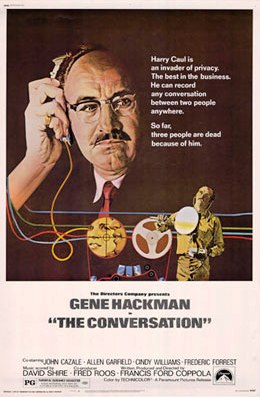
I have been enjoying the way movies can play tricks on you or experiment with narrative, having recently seen two surprising films. The first, The Prestige (2006), was a drama that keeps you guessing all the way through. One or two brilliant moments towards the end really shine where the obsession of the two main characters, both stage magicians, breaks through, and we finally see what drives them. Another was the (very) slow but compelling thriller The Conversation (1974), in which Gene Hackman stars as troubled and obsessive surveillance man, Kaul, as he tries to piece together a conversation his team has managed to record, to find out why it is wanted so much, and what danger it could cause. What sounds like a random chat (“who started this conversation anyway?”) grows to have more and more significance as the puzzle grows thicker. And the film refuses to give you all the answers.
Following on from my post on quirky films last month, here are 3 more films which don’t give you the full picture straight away.
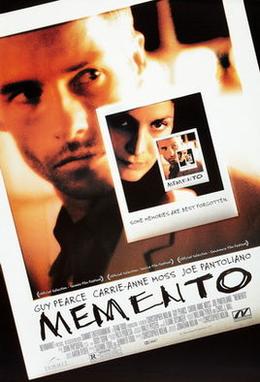
Momento (2000)
Christopher Nolan’s brilliant debut as director is required viewing if you are into “serious” films, or crime films, or dramas. Guy Pearce plays Leonard, a man whose short-term memory does not work very well, and Nolan gives us insight into this experience by stopping us seeing what has just happened before each segment of film. So how does the film work? Well, we see the last section first and go backwards! So the last moments of the film is the earliest point in the narrative – and this works really well. We understand Leonard's bewilderment and panic, we laugh and are shocked with him - all on his very personal quest to find his wife's killer. But the deeper you go into this film, the more unpleasant s character turns out to be… that’s all I’m saying, but you’ll never guess how complex his life and problems are. Makes you think twice about the issue of how to best treat or help disabled people.... and it also comments on the whole noir/police genre and how it works, with all the data and clues that you can't always follow, something that goes back to early noir like 1948's The Big Sleep.
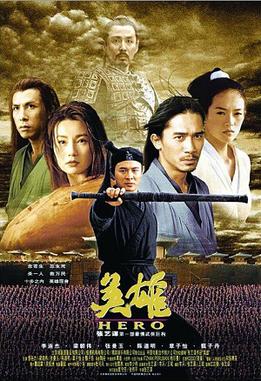
Hero (2002) – a great exploration of deception and the mettle of a person’s character which begins with a nameless prefect (Jet Li) from a small jurisdiction of Ancient China approaching the King of Qin in his impressive palace. He tells of how he has defeated the king’s three most deadly enemies, the assassins Broken Sword, Flying Snow and Long Sky. Amidst all the incredulously picturesque fighting, which is director Yang Zimou’s strange but enjoyable breed of superhuman fantasy martial acts (I think we should appreciate its uniqueness and the way it tells a story rather than bemoaning the weirdness of it), the plot becomes more and more devious. From a certain point in the film you are invited to begin to doubt the various narratives and ways of portraying the King’s quest to conquer rebels and expand his kingdom. OK, so the film doesn’t succeed as well at captivating us as the tragic, emotional journey that is House of Flying Daggers, but it is still worth a look, if only for the dazzling colours in the costumes and fights.
Millennium Actress (2001) – if you’re willing to let the answers come gradually through what can be a confusing 2 hours, take a look at this beautiful animated film where the story unravels through incredible scenery from Japanese cinema, ranging from ancient Japanese warfare to the high-school genre, to rural settings, and even to a mission to the moon (an incredibly beautiful metaphor in the film). Through each film sequence, we follow the story of one actress’s impressive life as she is picked from obscurity and becomes famous, and yet throughout seems to be chasing a mysterious love, who she treasures more than those around her. The film worlds overlap with the real one, until we become as caught up in her life as her two biggest fans. Actually a very simple idea, but cleverly put together into a superb, moving, and at times comical, film that shows just how stubborn and complex and “unready to settle” we humans can be. The haunting climax poses some serious questions to us about what it is that we are looking for in life. When will our dreams be fulfilled?
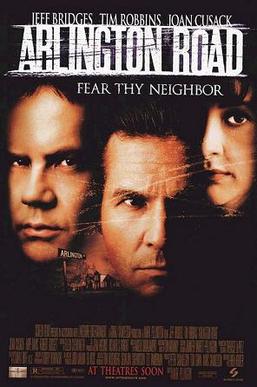
I could have also mentioned Arlington Road here, a 1999 film about trust, community, and perhaps the state of America, starring Tim Robbins, and which from an already edgy story determines to defy the conventional, and the way we expect the movie to head.
One more off-the-wall movie to finish you off: Night Watch (2004) – which was at times quite an uncomfortable experience, and comes across as more a bunch of crazy ideas than one story – but (and this will be highly personal to each viewer) it never put me off engaging with its gritty horrific world in all the confusion and which won points with me with some really surprising intense sequences borrowing
from the thriller and action genres, and a killer ending. I'm not sure I followed it all, and not sure if its view of the world having a balance between good and evil is supposed to be good or not, it all seems very sinister and kind of an arbitrary way of running things.That's all for now, more on film to follow in a couple of weeks...
Friday, 29 January 2010
Quirky and fun movies
First of all, let’s get something out of the way - I really do enjoy big recent films: the thought-provoking crazy endurance film Blood Diamond, the excellently entertaining new Star Trek, the wonderful addictive Slumdog Millionaire (which brilliantly celebrates life and childhood whilst threatening this on every side with corruption and brutality, a wierd mixture of realism and modern fairy tale) and what else? Up, The Bourne Ultimatum, Iron Man – the list goes on.
But I want to post a few times on quirkier films, ones where you aren’t so sure how it will all end, ones where the story is told in strange ways, or the look and tone of the movie resonate in a particularly weird way. These are films which love the unexpected.
Children of Men (2006) – watch this if you can take it. Technically it would be hard to find a film more impressively choreographed and shot. We follow Theo (Clive Owen) in a world where no children have been born for 18 years, and parts of England have become self-obsessed, madly fierce, xenophobic, fighting over their own agendas and resources, pretty much in chaos. It’s incredible because one can imagine that if this did happen, people would not know how to respond, and the feeling of impotence shared by the people in the film would be palpable; people would fear they were under a terrible curse. There's something spiritually numbing or just plain awe-full, having the knowledge that life stops with the men and women living now, and it shows that living in fear and confusion, with no hope for life or for the future, is not really living at all. Thank God the universe will not spiral out of control like this, into the finality of extinction - thank God that His people will actually last and really live life for eternity!
Back to the film though, bleak as it is: Theo makes a reckless journey through the land, as he seeks the impossible: a hope against hope for the world. It’s not an easy watch, but it’s worth it even if this is just for the enormous set-piece towards the end, or experiencing the incredibly long and action-packed handheld shots as they take us deep into the relentless trouble they encounter.
Mirrormask (2005) – Neil Gaiman, the writer of The Sandman comics and behind films such as Coraline and Stardust, is also behind this slightly eerie, fun adventure story, which is refreshingly different from the usual Hollywood family film. For instance, some of the real-world parts were filmed on some flats in Brighton, while the otherworldly realm, which is explored in most of the film, is at times framed in a way that reminds us of the theatre, or early cinema (Shots are taken from a distance, so we see the actors as performers on stage or in the circus, and the colours are grainy like an old film.) This is a world where everyone wears masks, fishes swim in the air, and strange angular sphinxes prowl around menacingly (yes, the FX could be better) looking for words (or people) to devour. These are signs of the world’s doom, as is the blackness spreading everywhere, so young heroine Helena enlists masked performer Valentine’s help to find something called the “mirrormask” which holds the key to repairing the strange world. The best bits are when you first encounter the strange and amusing sphinx, the nice touches with the “really useful book”, and the thrilling part with the massive floating giants, which look like figures from an expressionist painting.
It has to be said though the film has pacing problems and gets a little tiring by the time you get to the musical brain-washing sequence near the end. The film also deals with some interesting issues for a children’s film such as what is expected of a child by a parent and how they can escape that identity into standing on one’s own in mature adulthood. What really defines us? What we wear, what we do, who we are with, how we treat others?
Brazil (1985) – Elements of black comedy combine with satire and adventure in this, probably one of the strangest movies I’ve seen. It follows a low-level government official, who, in his occasional dreams, flies through clouds and rescues a woman by battling a giant samurai, one that bleeds flame when punctured…* yes, really! The film is great at contrasting this kind of insane fantasy with the utterly banal, anti-social and uncaring society which Sam Lowry lives in, and I think that is its basic point – that repressing creativity and devaluing humanity is the greatest tragedy of all, breeding insanity and all kinds of cruel injustice by losing touch with the value of human life; time and again we see the “system” victimising individuals through the means of endless paperwork and regulations. Or perhaps, as we root for Lowry as he overcomes obstacles to pursue a woman in the real world, we learn how noble the ideal of romantic love is, and yet how unrealistic and unachievable it can be.
Although the film is very long and quite tedious, if you have the time one evening, there are some amusing moments, such as the brief appearances of Robert De Niro as an illegal plumber, or the way one character’s expensive plastic surgery progressively makes her look worse and worse. In fact these kind of obsessive tendencies hold a bizarre mirror up to our own culture’s views of the self as “god” while many people are lonely and lack any sense of meaningful community. Finally, about the title: It is not set in Brazil, and in fact if you had to re-name it you could call it “Control” or “How a typo and a dream can slowly drive you insane”.
Terry Gilliam was behind the film, and honestly I think he does a better job directing on Twelve Monkeys (1995), his fun (but ugly) adventure story starring Bruce Willis and a young (and crazy) Brad Pitt, which raises some points about time travel I hadn’t thought of before. Living in two times should really come with a health warning: Bruce’s character gradually loses touch with reality as his brain can’t cope with him being sent back to locate and stop the spread of a virus which almost wipes out humanity. See you’re interested already, aren’t you? There’s also an interesting part where a psychologist admits that she is losing her “faith” in her profession. Seems Gilliam can’t leave the idea of insanity alone…
-------------
*These bits remind me of other films with surreal dream-like sequences, like Blade Runner or Eternal Sunshine of the Spotless Mind, and are rare moments in film – so very child-like.
-------------
All pictures come from Wikipedia. Please sound off about any of these films below, as I'd be interested in thoughts on the movies, especially Brazil. More picks to come soon, including the evocative, the beautiful, the plain wierd, the intensely personal, and the ludicrously action-packed....
But I want to post a few times on quirkier films, ones where you aren’t so sure how it will all end, ones where the story is told in strange ways, or the look and tone of the movie resonate in a particularly weird way. These are films which love the unexpected.
Children of Men (2006) – watch this if you can take it. Technically it would be hard to find a film more impressively choreographed and shot. We follow Theo (Clive Owen) in a world where no children have been born for 18 years, and parts of England have become self-obsessed, madly fierce, xenophobic, fighting over their own agendas and resources, pretty much in chaos. It’s incredible because one can imagine that if this did happen, people would not know how to respond, and the feeling of impotence shared by the people in the film would be palpable; people would fear they were under a terrible curse. There's something spiritually numbing or just plain awe-full, having the knowledge that life stops with the men and women living now, and it shows that living in fear and confusion, with no hope for life or for the future, is not really living at all. Thank God the universe will not spiral out of control like this, into the finality of extinction - thank God that His people will actually last and really live life for eternity!Back to the film though, bleak as it is: Theo makes a reckless journey through the land, as he seeks the impossible: a hope against hope for the world. It’s not an easy watch, but it’s worth it even if this is just for the enormous set-piece towards the end, or experiencing the incredibly long and action-packed handheld shots as they take us deep into the relentless trouble they encounter.
Mirrormask (2005) – Neil Gaiman, the writer of The Sandman comics and behind films such as Coraline and Stardust, is also behind this slightly eerie, fun adventure story, which is refreshingly different from the usual Hollywood family film. For instance, some of the real-world parts were filmed on some flats in Brighton, while the otherworldly realm, which is explored in most of the film, is at times framed in a way that reminds us of the theatre, or early cinema (Shots are taken from a distance, so we see the actors as performers on stage or in the circus, and the colours are grainy like an old film.) This is a world where everyone wears masks, fishes swim in the air, and strange angular sphinxes prowl around menacingly (yes, the FX could be better) looking for words (or people) to devour. These are signs of the world’s doom, as is the blackness spreading everywhere, so young heroine Helena enlists masked performer Valentine’s help to find something called the “mirrormask” which holds the key to repairing the strange world. The best bits are when you first encounter the strange and amusing sphinx, the nice touches with the “really useful book”, and the thrilling part with the massive floating giants, which look like figures from an expressionist painting.
It has to be said though the film has pacing problems and gets a little tiring by the time you get to the musical brain-washing sequence near the end. The film also deals with some interesting issues for a children’s film such as what is expected of a child by a parent and how they can escape that identity into standing on one’s own in mature adulthood. What really defines us? What we wear, what we do, who we are with, how we treat others?
Brazil (1985) – Elements of black comedy combine with satire and adventure in this, probably one of the strangest movies I’ve seen. It follows a low-level government official, who, in his occasional dreams, flies through clouds and rescues a woman by battling a giant samurai, one that bleeds flame when punctured…* yes, really! The film is great at contrasting this kind of insane fantasy with the utterly banal, anti-social and uncaring society which Sam Lowry lives in, and I think that is its basic point – that repressing creativity and devaluing humanity is the greatest tragedy of all, breeding insanity and all kinds of cruel injustice by losing touch with the value of human life; time and again we see the “system” victimising individuals through the means of endless paperwork and regulations. Or perhaps, as we root for Lowry as he overcomes obstacles to pursue a woman in the real world, we learn how noble the ideal of romantic love is, and yet how unrealistic and unachievable it can be. Although the film is very long and quite tedious, if you have the time one evening, there are some amusing moments, such as the brief appearances of Robert De Niro as an illegal plumber, or the way one character’s expensive plastic surgery progressively makes her look worse and worse. In fact these kind of obsessive tendencies hold a bizarre mirror up to our own culture’s views of the self as “god” while many people are lonely and lack any sense of meaningful community. Finally, about the title: It is not set in Brazil, and in fact if you had to re-name it you could call it “Control” or “How a typo and a dream can slowly drive you insane”.
Terry Gilliam was behind the film, and honestly I think he does a better job directing on Twelve Monkeys (1995), his fun (but ugly) adventure story starring Bruce Willis and a young (and crazy) Brad Pitt, which raises some points about time travel I hadn’t thought of before. Living in two times should really come with a health warning: Bruce’s character gradually loses touch with reality as his brain can’t cope with him being sent back to locate and stop the spread of a virus which almost wipes out humanity. See you’re interested already, aren’t you? There’s also an interesting part where a psychologist admits that she is losing her “faith” in her profession. Seems Gilliam can’t leave the idea of insanity alone…
-------------
*These bits remind me of other films with surreal dream-like sequences, like Blade Runner or Eternal Sunshine of the Spotless Mind, and are rare moments in film – so very child-like.
-------------
All pictures come from Wikipedia. Please sound off about any of these films below, as I'd be interested in thoughts on the movies, especially Brazil. More picks to come soon, including the evocative, the beautiful, the plain wierd, the intensely personal, and the ludicrously action-packed....
Monday, 19 October 2009
Pixar's Up - a brief review
Here's the thing about Up: It is, I think, a fantasy-slash-drama, rather than a kid's film - and its subject? Moving on after a bereavement, escaping into the clouds and finding true freedom in the process.
The main two characters, brilliantly animated, are put in situations which somehow show us emotions which people struggle with every day. Loss, bitterness, bewilderment, a sense of being left behind, acceptance, empowerment, joy, hope, victory. It's pretty powerful stuff, tied up in a story perhaps as symbolic as Finding Nemo seems to be.
It is a tour de force for Pixar, who are showing Hollywood what worthwhile cinema is. As my first experience of the new 3-D film technology, it did impress on that score too, with a few stand-out effects.
Up is also exciting, surreal, and laugh-out-loud funny, especially when it involves the dog Kevin, or the tracker dogs who come after Karl and his floating house. This one ranks as an unmissable film, and one of Pixar's best.
The main two characters, brilliantly animated, are put in situations which somehow show us emotions which people struggle with every day. Loss, bitterness, bewilderment, a sense of being left behind, acceptance, empowerment, joy, hope, victory. It's pretty powerful stuff, tied up in a story perhaps as symbolic as Finding Nemo seems to be.
It is a tour de force for Pixar, who are showing Hollywood what worthwhile cinema is. As my first experience of the new 3-D film technology, it did impress on that score too, with a few stand-out effects.
Up is also exciting, surreal, and laugh-out-loud funny, especially when it involves the dog Kevin, or the tracker dogs who come after Karl and his floating house. This one ranks as an unmissable film, and one of Pixar's best.
Tuesday, 29 September 2009
Where I am now...
Lately I've also been quite excited about new Good Book Company resources coming out, and pleased to be reminded by John Piper that God works in us so that we see his mercy to us and how good he is and are satisfied in Him. Check out this resource for some of that and a challenge I felt as well about how part of the way we fail God is in not feeling enough passion for Him and His glory.
Finally, here's a couple of things which have amused me:
The trailer for the adaptation of The Road, which I discussed here already, shows how the bare-bones depressing story of that book has been easily made into an appealing (and perhaps better-balanced) suspense blockbuster.
Meanwhile, if you have time this week, check out "The Story of the Killers" on the BBC's Radio 1 website. Oh, and here's a silly link about the dark side of Disney.
Thursday, 24 September 2009
Movie review: District 9
This was an excellent cinema-going experience, which my friend and I both found thought-provoking some time after the movie ended. How on earth can we treat people like we do? The early part of the film unfolds, documentary-style, how the film's aliens have come to be living in the South African slum area known as District 9 (based on an infamous white-only area of Cape Town, from which 60,000 people were forced to move during the 70s, their homes bull-dozed).
When they arrived, mal-nourished and strange, the humans didn't know what to do with the alien nuisance. Feared because of their prawn-like appearance, it isn't long before riots erupt and barbed wire goes up surrounding the "prawn" zone. So the
stage is set for main protagonist Van Der Merwe to wade in with an armed team to forcibly evict the aliens and confiscate their personal "illegal" property - and so begins this story about recovering freedom from oppression, at great cost.The film makes it easy to see how prejudice, cruelty and deception can be the convenient thing, there being great political pressure to get the aliens moved further from Johannesburg. It is an exciting, important project, for the good of South Africa - rather than an illegal act, taking advantage of those who don't know how to defend themselves according to South African law. It's certainly not seen for what it really is: An upheaval of families, the aliens and their children, a bullying of them and herding them up into more of a prison camp than a home.
If this is sounding a bit heavy, it's not all about political allegory. The story twists into a frantic kind of horror, a short section a bit like The Fugitive, and finally an impossible-seeming mission to set things right - which leaves us with a violent, action-y climax. It is definitely surprising, feeling like an energetic South African drama, but also drawing on the action blockbuster genre. I was thinking about the other films I've been to see this year and would say it lies somewhere in the middle of a film like the excellent Slumdog Millionaire and the satisfying summer flick Star Trek. But I guess more thought-provoking than either!
Sunday, 13 September 2009
Grab the popcorn....
Having been away in Wales the past week, with no internet, I'm getting round to blogging on bits and bobs I've been thinking about over summer.But first, for all those movie fans, I just saw a trio of thought-provoking dramas. Thirteen Days was an excellent political drama, focusing on the Cuban missile crisis, an example of how a film can draw you in to make you imagine what a real-life event was like, and the stresses on US policy makers. It was well-acted, thought-provoking, tense, and a brilliantly made film.
The Last King of Scotland was an incredible performance movie, and you spent most of this lively movie wondering when the other shoe is going to drop. An ugly story exposing the self-centred attitudes of Western visitors to Africa and the fierce proud madness of Ugandan dictator Idi Amin. (As a Christian, with minds for Jesus, do like we did and fast forward through the sex scenes.)
And biopic Ray was a quite engrossing but over-long look at the way Ray had to grind his way to the top of the ladder to make records in his own name, and the destructive nature of his personal life, partly overcome at the eleventh hour, by finally quitting heroin. Jamie Foxx plays Ray very well, exceptionally so in a sad scene near the end in which Ray and his wife argue over the drugs.
On a lighter note, it seems Disney are making a major come-back. Not only have they just bought Marvel, they have just announced the next Pirates of the Carribean movie, based on a fun-sounding pirate
novel, as well as a new Muppets movie, and a new Toy Story movie with Pixar and a live-action collaboration with them called John Carter of Mars. What else? Only the launch of some new animated horror/adventure films with Guillermo Del Toro, director of the upcoming Hobbit films, and a classically animated movie The Princess and the Frog. Oh and 2 collaborations with Tim Burton, and 2 live action movies with producer Jerry Bruckheimer, including an adaptation of The Sorcerer's Apprentice and an adventure movie based on the computer game Prince of Persia. Oh and a 3-D Yellow Submarine movie. Exciting times!Well, maybe we should just forget about the last one.
Tuesday, 14 July 2009
Predictions about Moon
Check this trailer out: http://www.imdb.com/video/imdb/vi843186969/.
I love how it looks like it is using an interesting concept to examine character, in a place where there is basically no escape from yourself! I guess you have to have some mental strength to be in space for a long time.
Do you think it could be too predictable though (ie. he goes mad?) Is it just Castaway in space?
I love how it looks like it is using an interesting concept to examine character, in a place where there is basically no escape from yourself! I guess you have to have some mental strength to be in space for a long time.
Do you think it could be too predictable though (ie. he goes mad?) Is it just Castaway in space?
Monday, 13 July 2009
How Heat (1995) influenced The Dark Knight (2008)
With director Michael Mann’s new film Public Enemies in cinemas, and because of my interest in Batman, here’s a brief introduction to how the latest (and greatest) Batman film picks up on lots of elements from Heat, Mann’s adult crime drama. You can see it even from the DVD back cover of Heat, where we see Al Pacino standing with shotgun ready, resembling a moment where Gary Oldman’s character Lieutenant Gordon heroically faces the Joker. Or try the opening sequence, a carefully orchestrated and clearly shot armed robbery of a delivery van* in broad daylight by a team wearing white hockey masks. The difference is that in The Dark Knight the Joker’s bank robbery (which opens the film) goes perfectly, with no loose ends (if you have seen it you know what I mean) – while the member of the gang in Heat who manages to escape the rest of the gang becomes an important seed of the group’s downfall.
Battling with hearts and minds
Moving towards some of the big themes of the films, both give an account of a struggle between two factions, with high stakes for each side – but ultimately, these are struggles based on principles. In Heat Robert De Niro plays professional criminal Neil McCauley, who goes after big “scores” with his crew, but who becomes conflicted. He insists that he will live a life without ties – where everything and everyone can be left behind in 30 seconds if the “heat” is on to them. Yet while this is the life he has built for himself, and accepted, he starts working towards another one, longing to leave behind all bank “jobs” and escape with Eady. He is finally spotted by Pacino’s Lt Hanna while trying to clear up loose ends, the betrayal of his own principle – in fact it is precisely the feelings of loyalty (and anger) that he imagined he could ignore which make him go back, and stop him cutting loose from the city at the crucial moment. His philosophy would have worked, but was apparently unliveable – he could not leave behind the relationships he started: it would be denying the worth he felt they really had – in a way, denying himself. This poses the interesting question to us: when the pressure is on, what or who really matters to us? What are we willing to make a stand for, even when it makes things messy and difficult to deal with?
Similarly Lt Hanna (McCauley’s nemesis) attempts to manage his own relationships in quite a brutal way, putting his job first (his wife confronts him with this idea that this hunt for prey is the “only thing you’re committed to. The rest is the mess you leave as you pass through”) – but the difference between the two is Hanna’s fierce, unwavering loyalty to his city and his police department, and to capturing the gang.
In The Dark Knight the ideological battle is more sinister. It seems that the Joker, fascinated with the appearance of the hero Batman, is trying to prove that people in general, and even those who consider themselves to be “in the right”, are not really good, and can be turned towards evil if their circumstances change, and they feel betrayed, or afraid, or come under some other kind of stress, such as suffering an unjust loss or trauma. Unnervingly he seems to face us with the question: “what will it take for us?” He seems to prove in the film that people are fragile and that chaos is easily achieved, as reinforced by his final words in the film, to Batman: “You see, madness, as you know, is like gravity – all it takes is a little push!” However the Batman manages to restore order and bring an end to the ongoing terrorism, and it seems that (although he comes close) he does not “break”. He proves to the Joker that it is possible to continue resisting evil (even under great strain) without becoming twisted and evil, like the DA does – although for Batman to do this it comes at great personal cost. It is as if the line that the DA crosses in taking a life makes him irreparable, even irredeemable, whereas Batman can remain heroic because he never succumbs totally and kills.
Defending the city
Heat makes a lot of comparing the lives, quality of relationships and motivations of the LA cops with those of the criminals they are after. Again, heroism comes at a personal cost, which at times must be unbearable for Lt Hanna, whose wife loses patience with him and whose step-daughter suffers too from his absence.
In parts it seems the cops in Heat are trying to defend their city with as much self-sacrifice and obsession as Bruce Wayne shows in the recent Batman films. It’s an all-consuming quest for justice which requires ugly action, tough strategy, careful planning, sleepless days and long nights. In many ways you can understand Heat as a revenge tragedy. The police see it as “You kill our men, you disrespect the law – don’t expect us to hesitate in shooting back and taking you down”. Los Angeles has got to be safe, and dead cops have to be avenged.
As in the comics, Batman is also bound by a code and an absolute commitment to protecting his city. Director Christopher Nolan’s take on the character is that he acts out of a belief in the fact that there are good people in the city, which he can not let be swallowed up and bullied by the criminal element. This was a big theme in Batman Begins** (the first in this revamped series), where a young Bruce had to get to a position in which he could trump the “bullies” by creating his own intimidating presence, thereby using their own weapon against them. He is simultaneously purging the city from the clutches of corruption and ransoming the city for society to be able to function. This is why the Joker’s random destruction is so threatening, totally undermining order and the city’s infrastructure (eg the police, the mayor’s office, high society, the prison system, and memorably, the hospitals).
Bruce dedicates himself to cleaning up the city, carrying on the proud tradition of his parents (like a knight archetype who reveres and continues the work of past martyred saints – it is not too far-fetched to make this the equivalent of a holy
cause for him); and in The Dark Knight, he enlists other “knights of the realm” to stand guard alongside him, deepening his partnership with Gordon and the police force, utilising big business, even the city hall. While The Dark Knight seems to cover a lot of intellectual and mythological angles on this battle against corruption, Heat is a more personal tale, tugging at our emotions as we see the way circumstances, words and actions bring tension between families, and hurt partners. The gang gamble on making some big scores, to support their chosen lives, but the promises they make and break are significant beats of the story – and the horrific final shootout has reverberations on all those close to McCauley’s crew, and beyond. I salute the writers and directors for making such fascinating worlds to lose ourselves in, and whose strong characters create gripping ideological (and physical) struggles in each film.
(NB: Heat clocks in at 164 mins, so it feels like quite a long watch. If you like it, Al Pacino is also interesting to watch in crime drama Carlito’s Way (1993), a film which is slow-burning, leading to a thrilling 20-25 minutes finale section, as Carlito makes his run for freedom from his past gangster life, similar to De Niro’s final run in Heat. I won’t recommend the film wholeheartedly though due to gratuitous sex and nudity, just to let you know.)
~~~~~~~~~~~~~
*The Dark Knight also has an armoured delivery van which is attacked as the focus of one of the Joker’s crimes, and so the similarities continue! British director Christopher Nolan acknowledges that Heat influenced him, and it probably was the reason he went for the kind of freeway landscapes he did for the big chase scene, to show a similar kind of world: a heavily built-up, industrial city.
Other similarities between the two films: Incredibly strong casts, and both films have brilliant sound, building tension through it using some strikingly similar long drone sounds.
**In Batman Begins there is a scene which reminds us how utterly irrational and evil extremist terrorist groups can be. While razing Wayne Manor to the ground, villain Ra’s reveals his motivation – a plot to burn the city down, as was done in the days of ancient conquest – all in order to produce a “better” world afterwards. I love how the language sounds kind of earnest and rational, but when you think about what they are saying it is utterly evil and mad! This reminds us that all evil is ultimately irrational, coming out of a faulty, broken understanding of the world and ourselves, and we can’t ultimately explain it away, or excuse it: it just is wrong.
Sunday, 21 June 2009
If machines ran the earth, there wouldn't be Sony branding on the technology
My dad didn't want to see Star Trek, and John Woo's epic Red Cliff was on too late, so last night we went to see the new Terminator movie, which was an entertaining way to spend two hours. Lots of action in a similar vein as the last 3 movies, but involving a bigger variety of machines, and some engaging new characters. I think the build-up, when Marcus, Star and Kyle are on the road, is probably better than the climax, for which by the very nature of the plot there is no long tension-building chase between the combatants. A number of minor things bugged me in the movie, but it had a few nice touches, such as the line "Do you think humans deserve a second chance?" - which is deeply ironic, when you understand the context.
The film also left me wondering if the series has ever told us what the machines are actually planning to do with the earth once humanity has been exterminated - why have they left it such a wreck? Anyone got any ideas on this? What have these machines been programmed to do again - wasn't it something about make the world a better place?
Did anyone else think as well that there is a strange ambivalence in the movie about what makes someone human? For instance in the ending and this idea that having a human heart makes someone pretty human, and yet also the idea that human bodies are mere resources to be used in the fight for survival?
I guess I'm going too far into it, the main aim is clearly to set up fights in a war and leave us thinking Connor has reached a significant victory. And it does this in an exciting way, leaving things wide open for sequel number five!
Friday, 29 May 2009
Film Review: Rebecca
They don't make them like this any more. Admittedly, there's some good to that, as this aging black-and-white psychological-thriller-mystery-drama has an incredulously drawn out and dull first hour, and so it becomes a really long film once you factor in all the suprising and compelling events of the second hour as well, finally clocking at 130 minutes. The story told is just a good old-fashioned mystery - so why is this, Hitchcock's first American film, so well loved? It could be the twisting plot, which does have its moments, and the hopes we have for something better for new bride of Maximillian De Winter, who is hopelessly (and annoyingly) out of her depth in Max's vast Gothic house. Together with her we discover the strange obsessions of the occupants of the house, and some irrestible family secrets. Perhaps the main appeal for me though was the way you are gradually drawn in, through the unsettling, down-right morbid reminders of the death of Max de Winter's first wife "Rebecca" that took place near the mansion. Such reminders come around with an odd and unnatural insistency, making us think that the house and grounds themselves are still somehow linked with the dead "Rebecca", especially in one masterful scene when the camera pans across where Rebecca had once walked across the room, following Max's memory of her, as if she is still there as a kind of lingering, bodiless presence.
It is perhaps worth adding that Hitchcock shows how much significance can be attached to the material, for Max's bride (the central character, apparently unnamed throughout the whole film) discovers that everything in the house is connected to a memory of Rebecca, and it is much harder for Max when he is closer to where Rebecca was than when they are far from the events of the past. It is definitely a film where the everyday becomes sinister, but in a different way to say, his classic Rear Window. Here it is because of the link with an unknown past, which has a hold on Max and which is clearly not done with any of the household either.
Recommended if you already have seen some of Hitchcock's later, often better-paced films, and you'd like to try something more unashamedly Gothic yet still with a solid focus on character. It often seems to ask us "What would you do in Max's position? Or if you were his new bride?" and draws us closer and closer to what we feel will inevitably be a very personal disaster for the pair... We could perhaps call it a study on coping with death, or a very specific view of fate actually works. Anyway, enough said by me - anyone else want to chip in on this one?
Sunday, 26 April 2009
Anime review - The Girl Who Leapt Through Time
I'm still enjoying the way the Japanese are able to create a different kind of tone in their animation: stories don't have to be oriented around world-changing events or part of a process by which a character becomes stronger and saves everyone. Instead, being courageous in small, mundane things, such as in the way a character treats her peers, can take the spotlight - without seeming overly sentimental.That is just one thing I enjoyed about the sunny animated film The Girl Who Leapt Through Time. In the film, the pressures of school and youth become real, as the amusingly assertive schoolgirl Makoto, who wants to keep the good times rolling, jerks the clock back to in her attempts to make the right impression, have fun, or to desperately hold on to the present status quo.
Bewildered to begin with by her new ability - to physically leap through space and time - Makoto soon finds a way to make it work for her, at the cost to her real-life friendships. In the end the film is about a funloving schoolgirl coming to terms with her future, seeing her errors and choosing to forge a better, less selfish way forward.
It's not as grand and layered a plot as something like Miyazaki's excellent Spirited Away, which tries to get its audience to enter into a child's position in an hostile and strange world, and so focuses on the magical, and a whole society of otherworldly characters which 10 year-old Chihiro has to find her footing in. After her true name is taken by Yubaba, she struggles and ultimately succeeds in forging a new identity for herself, and finally takes her family with her away from the danger.
In The Girl Who Leapt Through Time, Makoto does not have to grapple with a set of problems far bigger than herself in a world of ancient Japanese gods; she merely has to battle herself, finding out her own desires and priorities for the path ahead. Threats to Makoto's future development come from within: carelessness, pride, self-centredness, avoiding wisdom and responsibility and not listening to friends. It's a simple moral and well-told.
In summary, the film is much more low-key than one of Miyazaki's films, though it's good fun, and the animation is great to boot.
Subscribe to:
Posts (Atom)