In the day
pomp holds forth
against my wind pipe.
Shining walls,
Tables set for twenty,
Laughter, loud voices.
Given into the hands
of the gleaming walkers,
assessing each gain.
Exulting madly
In the quiet moments,
Floods and dreams.
I bear no scars on my cheek.
I carry no dead weight.
I speak with friends alone.
I keep up my own strength.
This portrait (which is perhaps barely a poem!) describes the present-day tragedy that I can see in people's lives and is called "the children have gone" after a line in Lamentations 1.
Wednesday, 31 March 2010


Tuesday, 30 March 2010
Poem: Obsession
Here's an angry, sketchy poem I recently read out at a monthly writers' group I started going to. I think it was liked. Another poem will be posted tomorrow, so check back for more!
Why shouldn't we
Place our places well,
Lay out sheets of space
Amid expensive, precious rubble?
- oh go on, stand it up,
keep that lamp to,
pass those small crystal dolphins,
the paper fan can hang by it.
Outside, why should we
Solve our own riddles
With bulldozers
Knocking out
Bases and roots -
stand that tree down,
wipe out its lip,
let rip all
but stay off the pavement!
Why shouldn't we
Place our places well,
Lay out sheets of space
Amid expensive, precious rubble?
- oh go on, stand it up,
keep that lamp to,
pass those small crystal dolphins,
the paper fan can hang by it.
Outside, why should we
Solve our own riddles
With bulldozers
Knocking out
Bases and roots -
stand that tree down,
wipe out its lip,
let rip all
but stay off the pavement!
"The Question" - and some questions for you about "redemption"
 As a fan of classics like V for Vendetta, I’ve been very impressed by the unorthodox and mysterious adventures of the Question in his comic series from the late 1980s. Our hero Vic Sage, who wonders if his greatest power is his curiosity, dresses up in a blank flesh-coloured mask and deals out kung-fu on those who try to stop him investigating crimes as "the Question". It’s all very Zen. The (rather dated) artwork, which is clearly going for “gritty”, portrays his traumatic personal journey well, and creates an immersive setting called “Hub City” – which just reeks of corruption for Sage to morosely contemplate or "kick to the curb".
 Sometimes the short, connected stories seem to be trying to tick boxes for all the “then” social issues in America (poverty, drugs, identity, pollution, the rebellious youth, family break-up, the aftermath of Vietnam) and tap into the 80s trend for violent martial arts and riddles of eastern philosophy. But the fact that the writer Dennis O’Neil is embracing the unknown makes this book stand out in our age when we tend to think everything can be explained rationally through science.
Again and again O’Neil hints that there is a life beyond this one, implies that perfection is achieved when the mind and body are rightly controlled or focused, or deals with questions of the spirit and the possibility of redemption. Often he won’t give us clear answers – but the central philosophy seems to be a mix of self-knowledge and improvement and moral responsibility to society, including environmental concerns. Hence the ongoing development of former newscaster Myra’s quest to change society as she watches her husband, the corrupt, alcoholic mayor of Hub City, permit all kinds of wrongdoing, from drug-running, to extortion and murder.
For the Question, however, justice is good but mercy is preferable. He sees a fine balance in himself between serving society and becoming reckless in his pursuit of justice. In one issue (No 8: “Mikado”) he confronts a serial killer who is at times called a “saint”, but who, behind a mask, is murdering those he deems evil. He is trying to redress the balance in Hub City, where evil men consistently get away with their crimes at the expense of their families or the poor.
The Question quickly gets to the point where he knows the identity of the killer, but his curiosity wins out: “I know who he is. Now I’ve got to learn why he is”. Meeting the killer, he points out a flaw in Mikado’s sadistic system, showing that although he, Vic Sage, is far from “innocent” and used to beat a girlfriend and relish his physical power, he has since managed to use his life to save people. Point blank, he asks: “Do I deserve to die?” The story ends ambiguously. How can a person judge the answer to this? How do we balance it and is it up to us? How can the evil be dealt with rightly, with punishment, in a way that allows society to continue on and improve? And for those who commit evil, is change possible? These are not straight-forward questions to answer.
This is going to sound very direct, but these are exactly the problems explored in the New Testament of the Bible. The writers are at great pains to show the depth of the problem of corruption and evil running rampant. There is a problem with humanity, and it stems from the fact that we are not in tune with our creator, God.

Delving deeper into redeeming the corrupt
In the book of Romans in the New Testament, God delivers the verdict on all mankind. For our behaviour towards each other and for the secret sins of our hearts, and for our rejection of Him and His ways of living – we deserve death. We are all “under sin” (see Romans 3:9 onward). Romans 3:19 teaches that the whole world is accused of sin before God and no-one has a defence.
This is also how Jesus, who loves us, talks about humanity as recorded by Mark (in Mark 7:21-23): "For from within, out of men's hearts, come evil thoughts, sexual immorality, theft, murder, adultery, greed, malice, deceit, lewdness, envy, slander, arrogance and folly. All these evils come from inside and make a man 'unclean.' "
So what can be done? What is the answer to this huge problem? If a thoroughly good God is against us because we are “under sin”, how can we be redeemed in his sight today, and saved from his final judgement when it comes?
It is possible by Jesus’ sacrifice for us - when he gave himself to death on the cross 2000 years ago. This is what his purpose was: that he could truly be our “life” by taking away the curse we face of being “under sin” and facing that curse himself and owning it. He has faced and borne God’s judgement in our place – so we don’t have to! Those who accept this gift and receive Jesus as Lord and Saviour can be considered pure and righteous in God’s sight – we are redeemed.
A great change has come
Restored to God, as we start to follow him and worship him, we can be restored in other relationships as well, areas where we have been corrupt or selfish. This doesn’t mean a prisoner who becomes a Christian will no longer have to face a hard sentence. We still live for now with the consequences of our actions on other people. But in God’s eyes there IS mercy. There is forgiveness and purification.
And it's not just reporters in comic-books with mixed motives who can use their lives now to impact others positively. For Christians, real change is made possible as we live knowing of Jesus’ sacrifice and trusting in Him now, experiencing the new life that he shares with us. This new life will transform us. He will make us different, growing in love and right-ness. As we live with Him, corruption must be tackled, not ignored. And as individuals change, growing more like Jesus, and work together, communities can be changed.
Learning this answer to the question of redemption is the beginning, and will probably lead to a whole new set of questions, so please comment below....
And do pick up The Question volumes 1 and 2 - the first tackles nihilism, control and hypocrisy, the second includes another thought-provoking story called "Poisoned Ground", which is a brilliantly constructed drama, with perhaps something to tell us about commercialism.
Sunday, 14 March 2010
Top films which love the unexpected
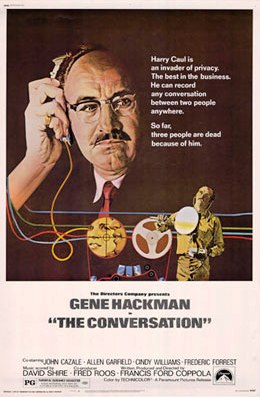
I have been enjoying the way movies can play tricks on you or experiment with narrative, having recently seen two surprising films. The first, The Prestige (2006), was a drama that keeps you guessing all the way through. One or two brilliant moments towards the end really shine where the obsession of the two main characters, both stage magicians, breaks through, and we finally see what drives them. Another was the (very) slow but compelling thriller The Conversation (1974), in which Gene Hackman stars as troubled and obsessive surveillance man, Kaul, as he tries to piece together a conversation his team has managed to record, to find out why it is wanted so much, and what danger it could cause. What sounds like a random chat (“who started this conversation anyway?”) grows to have more and more significance as the puzzle grows thicker. And the film refuses to give you all the answers.
Following on from my post on quirky films last month, here are 3 more films which don’t give you the full picture straight away.
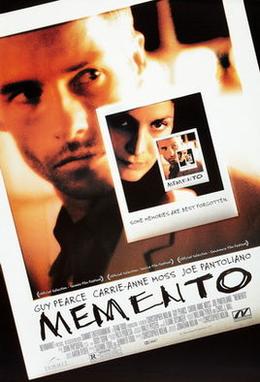
Momento (2000)
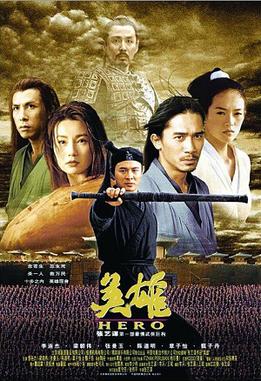

One more off-the-wall movie to finish you off: Night Watch (2004) – which was at times quite an uncomfortable experience, and comes across as more a bunch of crazy ideas than one story – but (and this will be highly personal to each viewer) it never put me off engaging with its gritty horrific world in all the confusion and which won points with me with some really surprising intense sequences borrowing
 from the thriller and action genres, and a killer ending. I'm not sure I followed it all, and not sure if its view of the world having a balance between good and evil is supposed to be good or not, it all seems very sinister and kind of an arbitrary way of running things.
That's all for now, more on film to follow in a couple of weeks...
Thursday, 4 March 2010
Being confronted: Am I messing around with God? - in Matthew 11
Just been looking at Matthew 11 in preparation for a talk. The end verses are well known and show Jesus' wide invitation to all people to hear him and "lean on" him (or trust in him) in their lives:
But how does Jesus feel about offering his invitation to people? And how does he get to a point where he says these great words, even in the midst of a time when people are finding fault with him and not committing to follow him? (It seems people are wanting Jesus to play along to their tune, rather than responding by obeying him.) Here's my run-down of some of the earlier parts of chapter 11.
verses 7-10. Following a visit from some of John the Baptist's followers, Jesus questions the crowds about the fiery teacher himself, John the Baptist: “You went to see John for a reason, remember? He’s a man of iron, an earnest man (you saw this), and he’s a prophet whose job was to point to the coming of the Lord.”
v11-15 “After the Prophets and the Law came, John has come, and now after him something far greater: the kingdom of God is here for all to enter - if people hear and avail themselves of this opportunity.”
v16-19 “What are you like? You don’t want to listen to John, and now you won’t listen to me (the greater one)! You have seen by our actions that we are from God.” (Actions including: John’s forthright teaching and lifestyle which captured crowds, and now Jesus’ teaching, amazing authority and miracles)
v20-24 Jesus denounces those who did not repent. “You cities who have not repented will not remain! Even when the wicked people from Sodom or Tyre or Sidon would have responded, you have not! You will face punishment for not responding in this unique time to me.”
v25-27 Jesus speaks to his Father: “Father, Lord of all kingdoms, thank you for how you hide and reveal your truth at the right times, so people can know you, all in line with your plan”
v28-29 Trusting God and with love for the people there anyway, Jesus invites people to him, promising them “rest for their souls” when they join with him.
It still amazes me how faithful God is to us in his Son Jesus when we are so faithless to Him.
---UPDATE---
Check out the 07.03.2010 talk I gave on this chapter on my church's website for more, and see what Jesus' response to the crowds was, his frustration with them and the judgement he announces as well as his great love to want to help them and give to them from his great riches: http://www.aechurch.org.uk/aec_sermons.php
"Come to me, all you who are weary and burdened, and I will give you rest. Take my yoke upon you and learn from me, for I am gentle and humble in heart, and you will find rest for your souls. For my yoke is easy and my burden is light."
But how does Jesus feel about offering his invitation to people? And how does he get to a point where he says these great words, even in the midst of a time when people are finding fault with him and not committing to follow him? (It seems people are wanting Jesus to play along to their tune, rather than responding by obeying him.) Here's my run-down of some of the earlier parts of chapter 11.
v11-15 “After the Prophets and the Law came, John has come, and now after him something far greater: the kingdom of God is here for all to enter - if people hear and avail themselves of this opportunity.”
v16-19 “What are you like? You don’t want to listen to John, and now you won’t listen to me (the greater one)! You have seen by our actions that we are from God.” (Actions including: John’s forthright teaching and lifestyle which captured crowds, and now Jesus’ teaching, amazing authority and miracles)
v20-24 Jesus denounces those who did not repent. “You cities who have not repented will not remain! Even when the wicked people from Sodom or Tyre or Sidon would have responded, you have not! You will face punishment for not responding in this unique time to me.”
v25-27 Jesus speaks to his Father: “Father, Lord of all kingdoms, thank you for how you hide and reveal your truth at the right times, so people can know you, all in line with your plan”
It still amazes me how faithful God is to us in his Son Jesus when we are so faithless to Him.
---UPDATE---
Check out the 07.03.2010 talk I gave on this chapter on my church's website for more, and see what Jesus' response to the crowds was, his frustration with them and the judgement he announces as well as his great love to want to help them and give to them from his great riches: http://www.aechurch.org.uk/aec_sermons.php
Friday, 12 February 2010
Moody anti-heroes from Marvel

After reading some confusing and unexciting solo Wolverine adventures, it was such a breath of fresh air to open the beautiful pages of this short miniseries and see the classic rogue hero battling to take care of his past in a way that couldn’t have been done until recently. Since House of M (see here for an explanation of that) Wolverine’s wiped memories of his past seventy-plus years of life have been returning and in Logan it’s clear he is still feeling the weight of all that has been done to him (and guilt at the things he has done too). Here he is confronting the horrors of what he survived at the end of the Second World War.
The art deserves a special mention, especially in the first part – the dark page layouts, gradually change to brighter, more expansive panels as Wolverine escapes a Japanese Nazi prison. Risso really is a fascinating storyteller in his own right, and this miniseries easily tops his work on a so-so Batman story a few years ago. Observe the way Risso shows us simple things like the light falling in the cell to the way he illustrates some of beautiful rural Japan, not often seen in films or comics, and a traditional Japanese home.


The Hulk is one Marvel character I have barely any knowledge about. But in this year-long epic a tragic “persecuted monster” storyline is fused with the political machinations and arenas of the film Gladiator, on an advanced planet far from Earth.
And why is the Hulk is ejected from Earth to start a new life on an alien world? All for the safety of humanity, of course, as decided secretly by Tony Stark (Iron Man) and Reed Richards of the Fantastic Four. Guess what? Hulk is mad – and the madder he gets….
Brilliantly it is far from being a story about the Hulk smashing everything in sight. Originally inhibited by alien technology and enslaved, he grows cleverer than the other gladiators, he shows loyalty to those who prove themselves serving alongside him, he manages to unite some of the diverse races on the planet, finding ways both to deliver an oppressed people and even to begin to undo the damage caused to the planet. And all along, he is followed by the devout and hopeful, who look to him as an unlikely saviour from their insanely self-obsessed monarch, the Red King. The question that kept me reading was this one: Will he succeed in all this? Can he actually play the hero? And when you see his rage and stubbornness, or some of the more despicable aspects of his allies, what will his new world look like when he’s done? Can he possibly find a home so far from Earth?

Highly recommended, because it is refreshingly different from the rest of mainstream comics, very different in scope to most comics on crime or superheroics, and the art, through most of this wild, surprising ride, is also excellent.
Wednesday, 10 February 2010
Catching up with Heroes


Another new character to pop up, a young teen who is a “healer”, also reminds us of the need for a strong family, and good guidance for those with powers, which has helped us see Mr Bennet’s new place in the world, and his good instincts for this sort of situation. However how he deals with the boy also reminds us that he doesn’t have all the answers, and highlights his powerlessness when the boy’s confusion and panic leads to disaster. If only he had these powers under control, he could be a force for great good – but even in the real world, bringing our bodies under control for good is not easy, and so sometimes even those used to being in control, like Mrs Petrelli, are faced with their faults and their insufficiency.


Friday, 29 January 2010
Quirky and fun movies
First of all, let’s get something out of the way - I really do enjoy big recent films: the thought-provoking crazy endurance film Blood Diamond, the excellently entertaining new Star Trek, the wonderful addictive Slumdog Millionaire (which brilliantly celebrates life and childhood whilst threatening this on every side with corruption and brutality, a wierd mixture of realism and modern fairy tale) and what else? Up, The Bourne Ultimatum, Iron Man – the list goes on.
But I want to post a few times on quirkier films, ones where you aren’t so sure how it will all end, ones where the story is told in strange ways, or the look and tone of the movie resonate in a particularly weird way. These are films which love the unexpected.
 Children of Men (2006) – watch this if you can take it. Technically it would be hard to find a film more impressively choreographed and shot. We follow Theo (Clive Owen) in a world where no children have been born for 18 years, and parts of England have become self-obsessed, madly fierce, xenophobic, fighting over their own agendas and resources, pretty much in chaos. It’s incredible because one can imagine that if this did happen, people would not know how to respond, and the feeling of impotence shared by the people in the film would be palpable; people would fear they were under a terrible curse. There's something spiritually numbing or just plain awe-full, having the knowledge that life stops with the men and women living now, and it shows that living in fear and confusion, with no hope for life or for the future, is not really living at all. Thank God the universe will not spiral out of control like this, into the finality of extinction - thank God that His people will actually last and really live life for eternity!
Back to the film though, bleak as it is: Theo makes a reckless journey through the land, as he seeks the impossible: a hope against hope for the world. It’s not an easy watch, but it’s worth it even if this is just for the enormous set-piece towards the end, or experiencing the incredibly long and action-packed handheld shots as they take us deep into the relentless trouble they encounter.
 Mirrormask (2005) – Neil Gaiman, the writer of The Sandman comics and behind films such as Coraline and Stardust, is also behind this slightly eerie, fun adventure story, which is refreshingly different from the usual Hollywood family film. For instance, some of the real-world parts were filmed on some flats in Brighton, while the otherworldly realm, which is explored in most of the film, is at times framed in a way that reminds us of the theatre, or early cinema (Shots are taken from a distance, so we see the actors as performers on stage or in the circus, and the colours are grainy like an old film.) This is a world where everyone wears masks, fishes swim in the air, and strange angular sphinxes prowl around menacingly (yes, the FX could be better) looking for words (or people) to devour. These are signs of the world’s doom, as is the blackness spreading everywhere, so young heroine Helena enlists masked performer Valentine’s help to find something called the “mirrormask” which holds the key to repairing the strange world. The best bits are when you first encounter the strange and amusing sphinx, the nice touches with the “really useful book”, and the thrilling part with the massive floating giants, which look like figures from an expressionist painting.
It has to be said though the film has pacing problems and gets a little tiring by the time you get to the musical brain-washing sequence near the end. The film also deals with some interesting issues for a children’s film such as what is expected of a child by a parent and how they can escape that identity into standing on one’s own in mature adulthood. What really defines us? What we wear, what we do, who we are with, how we treat others?
 Brazil (1985) – Elements of black comedy combine with satire and adventure in this, probably one of the strangest movies I’ve seen. It follows a low-level government official, who, in his occasional dreams, flies through clouds and rescues a woman by battling a giant samurai, one that bleeds flame when punctured…* yes, really! The film is great at contrasting this kind of insane fantasy with the utterly banal, anti-social and uncaring society which Sam Lowry lives in, and I think that is its basic point – that repressing creativity and devaluing humanity is the greatest tragedy of all, breeding insanity and all kinds of cruel injustice by losing touch with the value of human life; time and again we see the “system” victimising individuals through the means of endless paperwork and regulations. Or perhaps, as we root for Lowry as he overcomes obstacles to pursue a woman in the real world, we learn how noble the ideal of romantic love is, and yet how unrealistic and unachievable it can be.
Although the film is very long and quite tedious, if you have the time one evening, there are some amusing moments, such as the brief appearances of Robert De Niro as an illegal plumber, or the way one character’s expensive plastic surgery progressively makes her look worse and worse. In fact these kind of obsessive tendencies hold a bizarre mirror up to our own culture’s views of the self as “god” while many people are lonely and lack any sense of meaningful community. Finally, about the title: It is not set in Brazil, and in fact if you had to re-name it you could call it “Control” or “How a typo and a dream can slowly drive you insane”.
 Terry Gilliam was behind the film, and honestly I think he does a better job directing on Twelve Monkeys (1995), his fun (but ugly) adventure story starring Bruce Willis and a young (and crazy) Brad Pitt, which raises some points about time travel I hadn’t thought of before. Living in two times should really come with a health warning: Bruce’s character gradually loses touch with reality as his brain can’t cope with him being sent back to locate and stop the spread of a virus which almost wipes out humanity. See you’re interested already, aren’t you? There’s also an interesting part where a psychologist admits that she is losing her “faith” in her profession. Seems Gilliam can’t leave the idea of insanity alone…
-------------
*These bits remind me of other films with surreal dream-like sequences, like Blade Runner or Eternal Sunshine of the Spotless Mind, and are rare moments in film – so very child-like.
-------------
All pictures come from Wikipedia. Please sound off about any of these films below, as I'd be interested in thoughts on the movies, especially Brazil. More picks to come soon, including the evocative, the beautiful, the plain wierd, the intensely personal, and the ludicrously action-packed....
But I want to post a few times on quirkier films, ones where you aren’t so sure how it will all end, ones where the story is told in strange ways, or the look and tone of the movie resonate in a particularly weird way. These are films which love the unexpected.
 Children of Men (2006) – watch this if you can take it. Technically it would be hard to find a film more impressively choreographed and shot. We follow Theo (Clive Owen) in a world where no children have been born for 18 years, and parts of England have become self-obsessed, madly fierce, xenophobic, fighting over their own agendas and resources, pretty much in chaos. It’s incredible because one can imagine that if this did happen, people would not know how to respond, and the feeling of impotence shared by the people in the film would be palpable; people would fear they were under a terrible curse. There's something spiritually numbing or just plain awe-full, having the knowledge that life stops with the men and women living now, and it shows that living in fear and confusion, with no hope for life or for the future, is not really living at all. Thank God the universe will not spiral out of control like this, into the finality of extinction - thank God that His people will actually last and really live life for eternity!
Back to the film though, bleak as it is: Theo makes a reckless journey through the land, as he seeks the impossible: a hope against hope for the world. It’s not an easy watch, but it’s worth it even if this is just for the enormous set-piece towards the end, or experiencing the incredibly long and action-packed handheld shots as they take us deep into the relentless trouble they encounter.

It has to be said though the film has pacing problems and gets a little tiring by the time you get to the musical brain-washing sequence near the end. The film also deals with some interesting issues for a children’s film such as what is expected of a child by a parent and how they can escape that identity into standing on one’s own in mature adulthood. What really defines us? What we wear, what we do, who we are with, how we treat others?
 Brazil (1985) – Elements of black comedy combine with satire and adventure in this, probably one of the strangest movies I’ve seen. It follows a low-level government official, who, in his occasional dreams, flies through clouds and rescues a woman by battling a giant samurai, one that bleeds flame when punctured…* yes, really! The film is great at contrasting this kind of insane fantasy with the utterly banal, anti-social and uncaring society which Sam Lowry lives in, and I think that is its basic point – that repressing creativity and devaluing humanity is the greatest tragedy of all, breeding insanity and all kinds of cruel injustice by losing touch with the value of human life; time and again we see the “system” victimising individuals through the means of endless paperwork and regulations. Or perhaps, as we root for Lowry as he overcomes obstacles to pursue a woman in the real world, we learn how noble the ideal of romantic love is, and yet how unrealistic and unachievable it can be.
 Although the film is very long and quite tedious, if you have the time one evening, there are some amusing moments, such as the brief appearances of Robert De Niro as an illegal plumber, or the way one character’s expensive plastic surgery progressively makes her look worse and worse. In fact these kind of obsessive tendencies hold a bizarre mirror up to our own culture’s views of the self as “god” while many people are lonely and lack any sense of meaningful community. Finally, about the title: It is not set in Brazil, and in fact if you had to re-name it you could call it “Control” or “How a typo and a dream can slowly drive you insane”.

-------------
*These bits remind me of other films with surreal dream-like sequences, like Blade Runner or Eternal Sunshine of the Spotless Mind, and are rare moments in film – so very child-like.
-------------
All pictures come from Wikipedia. Please sound off about any of these films below, as I'd be interested in thoughts on the movies, especially Brazil. More picks to come soon, including the evocative, the beautiful, the plain wierd, the intensely personal, and the ludicrously action-packed....
Thursday, 28 January 2010
Poem: The fight (on my hands)
 Go ahead
Deny my need
And trumpet about
I can’t believe
That you would say
That to me
Keep it up
I don’t think
You even care
As if I would
Ever spurn you
Or leave you helpless
Why should I
Move at all
Change for you
If that’s the way
You want to see it;
You won’t enjoy it.
Monday, 11 January 2010
Enjoying snow!

As this week has been a battle to get in to work for most of us I thought I'd blog a little about my journey in to work. The roads being too icy for most, I've been setting out for the Gosport ferry on foot. The staff have shovelled out a path for us to the covered jetty. Below you can see what it looked like on Tuesday night, as we waited to board the ferry from the Portsmouth side during the first heavy snowfall. This was about 8pm, and we reckon the snow started before 5pm.


Heading on into Portsmouth:

Here is proof that my phone camera isn't really up to taking pictures in the evening light (This is Tuesday night again). The blurry effect on some of the shots is quite fascinating. Maybe I will buy myself a new camera soon....

The area around Guildhall Square stayed slippery the next few days from quite a few travellers passing through, just getting worse as the snow ices over. I heard about a group of volunteers taking shovels to the highstreet nearby though - good on them!


Trekking into work has to be done, but it can teach us too, and I want to be someone who lets the world proclaim to me and remind me of the works of God. I was reminded about this when snow came up in a great Bible passage. Here is the Bible telling us one thing snow should remind us of.
First a bit of context: After inviting people to come to Him, God is talking, through his prophet Isaiah, about his powerful word and how when he says something it achieves his purposes - which he says in later verses are to bring glory to himself and joy to people. And here's the quote:
"For as the rain and the snow come down from heaven
and do not return there but water the earth,
making it bring forth and sprout,
giving seed to the sower and bread to the eater,
so shall my word be that goes out from my mouth;
it shall not return to me empty,
but it shall accomplish that which I purpose,
and shall succeed in the thing for which I sent it." (Isaiah, chapter 55)
God is powerful and will not be stopped in using his message of hope about Jesus to change people and the world, even though it can take a while for the seed to sprout! As John Piper says in The Supremacy of God in Preaching we won't know the full impact of God's word until all the fruit on all the branches on all the trees that have sprung up from all the seeds we've ever sown (by preaching, or speaking about God to people) has "fully ripened in the sunshine of eternity".
So there you have it: God's word is like useful, wonderful snow! May God use my humble words to spread his wonderful message and to reach places for his glory.


Subscribe to:
Posts (Atom)